- Urban Design
- Studies
- 1968 - Cities in Protest
Cities in Protest
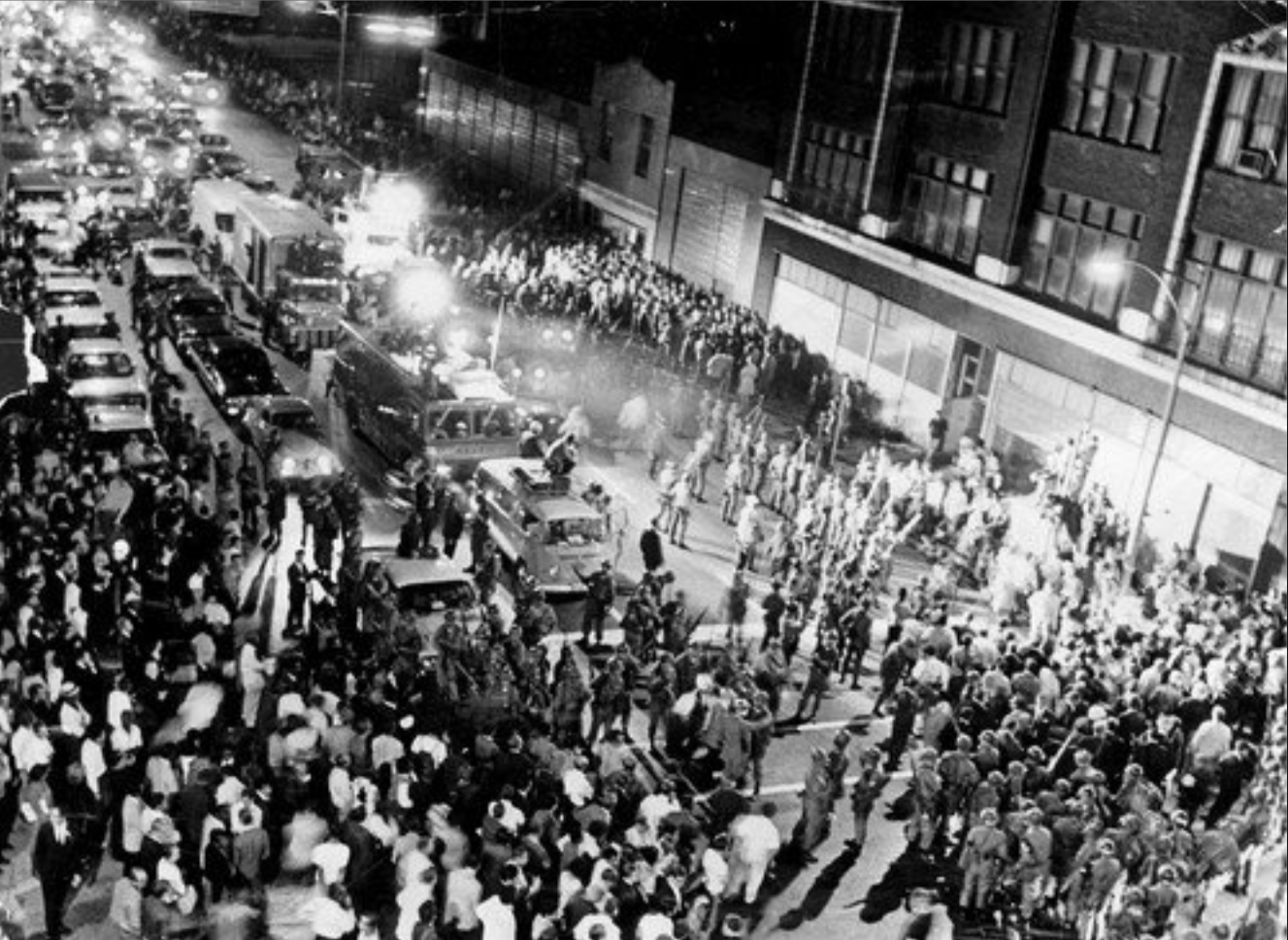
Cities have long been regarded as centers of political power and as concentrations of authority and culture. They are condensers of social interaction, and this raises the question: how does political change unfold in the city? From an architectural perspective, how does politics play out spatially? To examine this, the events of 1968 were the studied at UIC.
Considered fifty years later, these events are “stress-tests” to conventional urban theory about socialization and public gathering. Existing organizations, operations, and the status quo were deeply threatened by these events. As such, examination of what happened at the physical level can provide further insight on the interface between the political and the physical, and how political concerns and built fabric affect one another.
A study of protests in 1968 was undertaken to investigate the relationship between political power and urban spatiality. The tumultuous events of 1968 were the physical voice of massive social unrest that was throughout Europe and the United States, as a motivated populace took to the streets and vehemently sought major revisions to existing authority. The protests took place in a number of cities throughout America and Europe, with demonstrations, riots, and even occupations. Whole swathes of cities were taken over by groups unrecognizable in traditional terms.
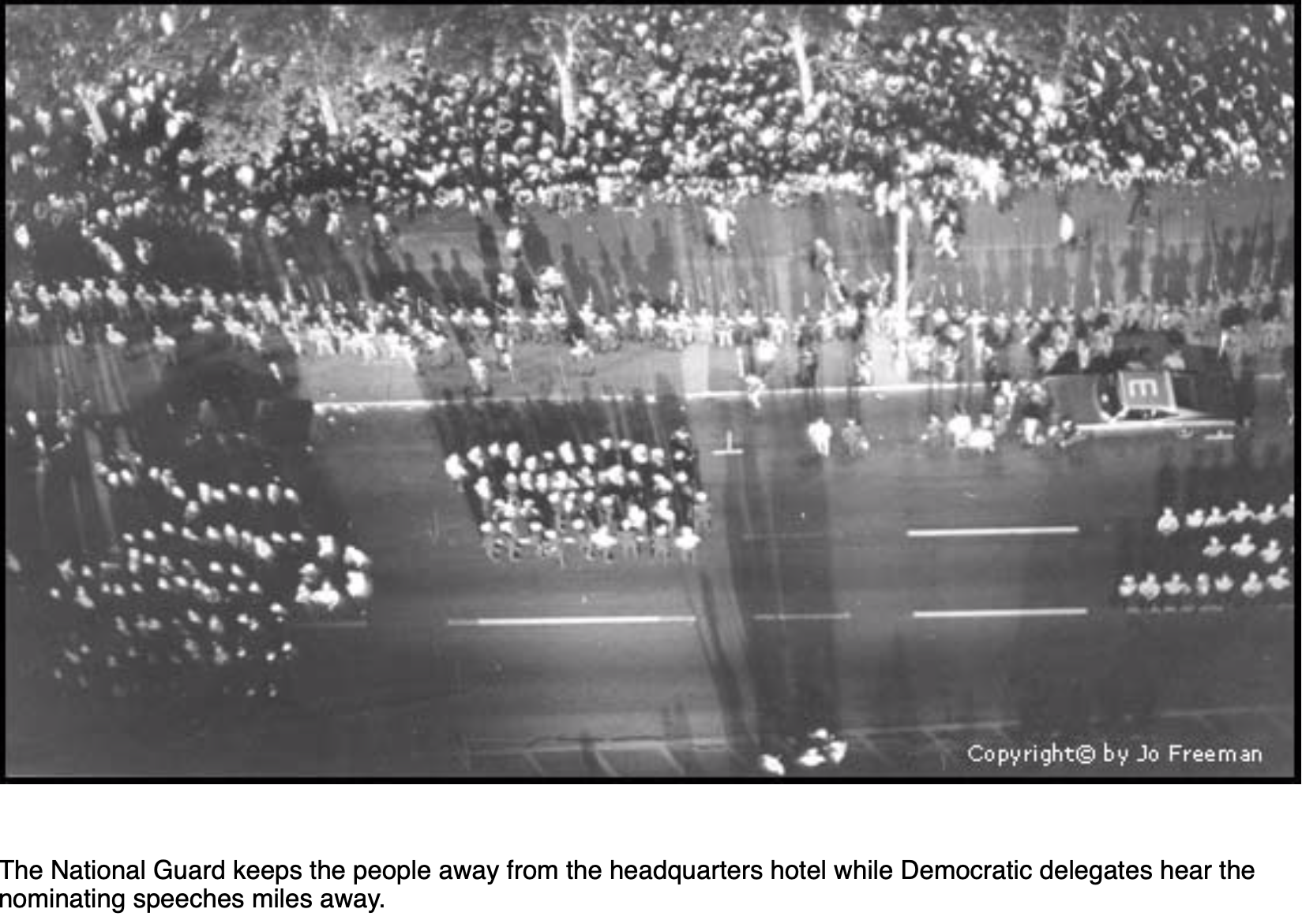
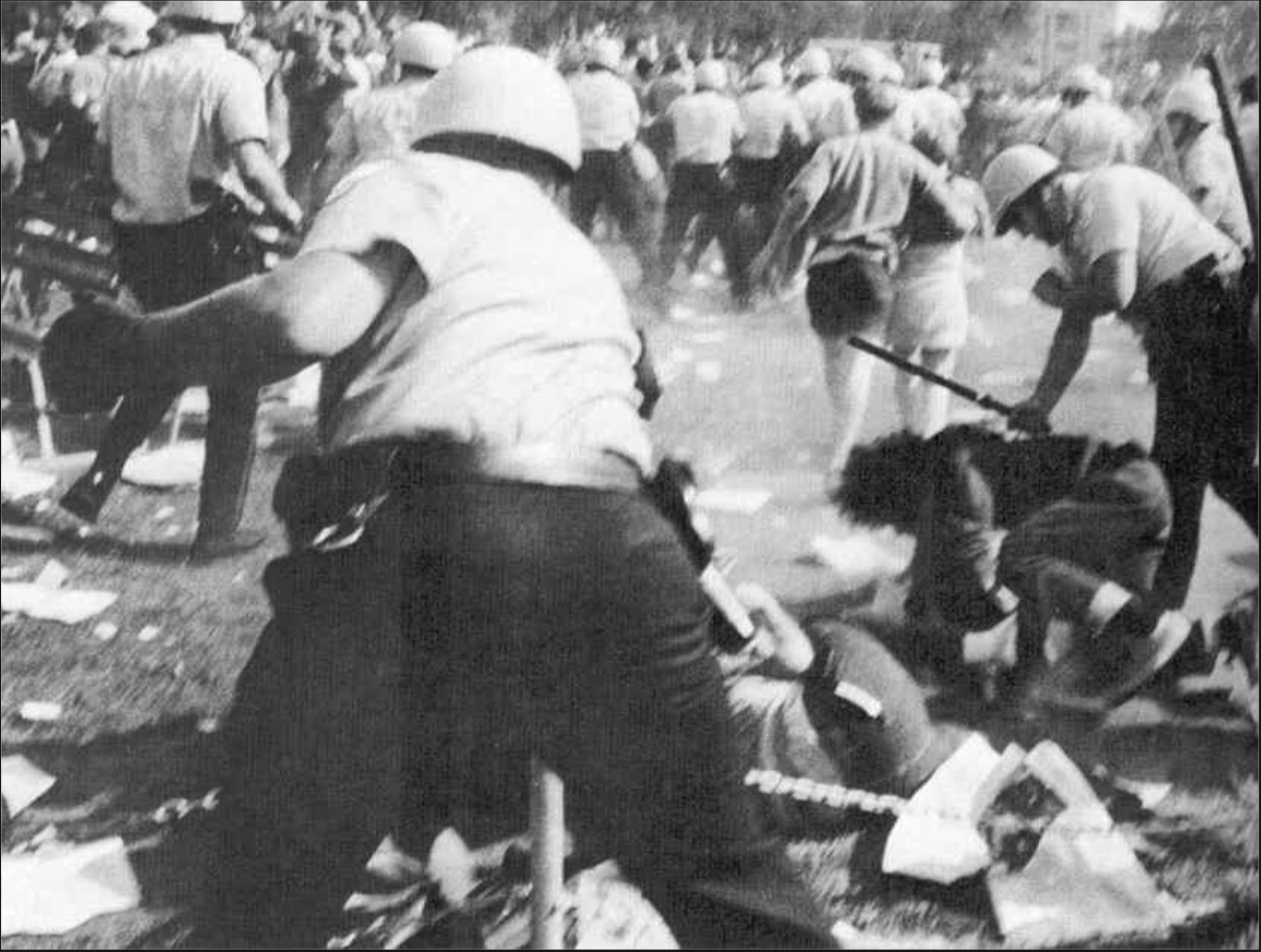
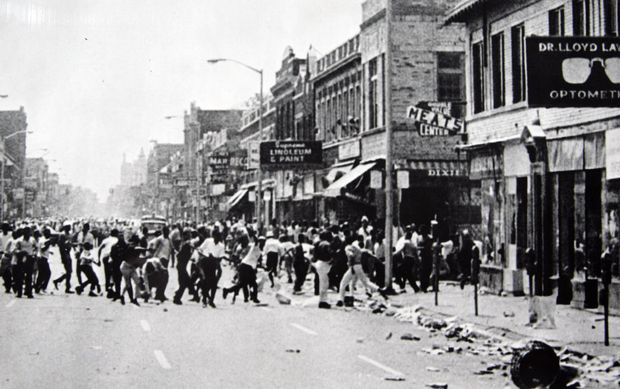
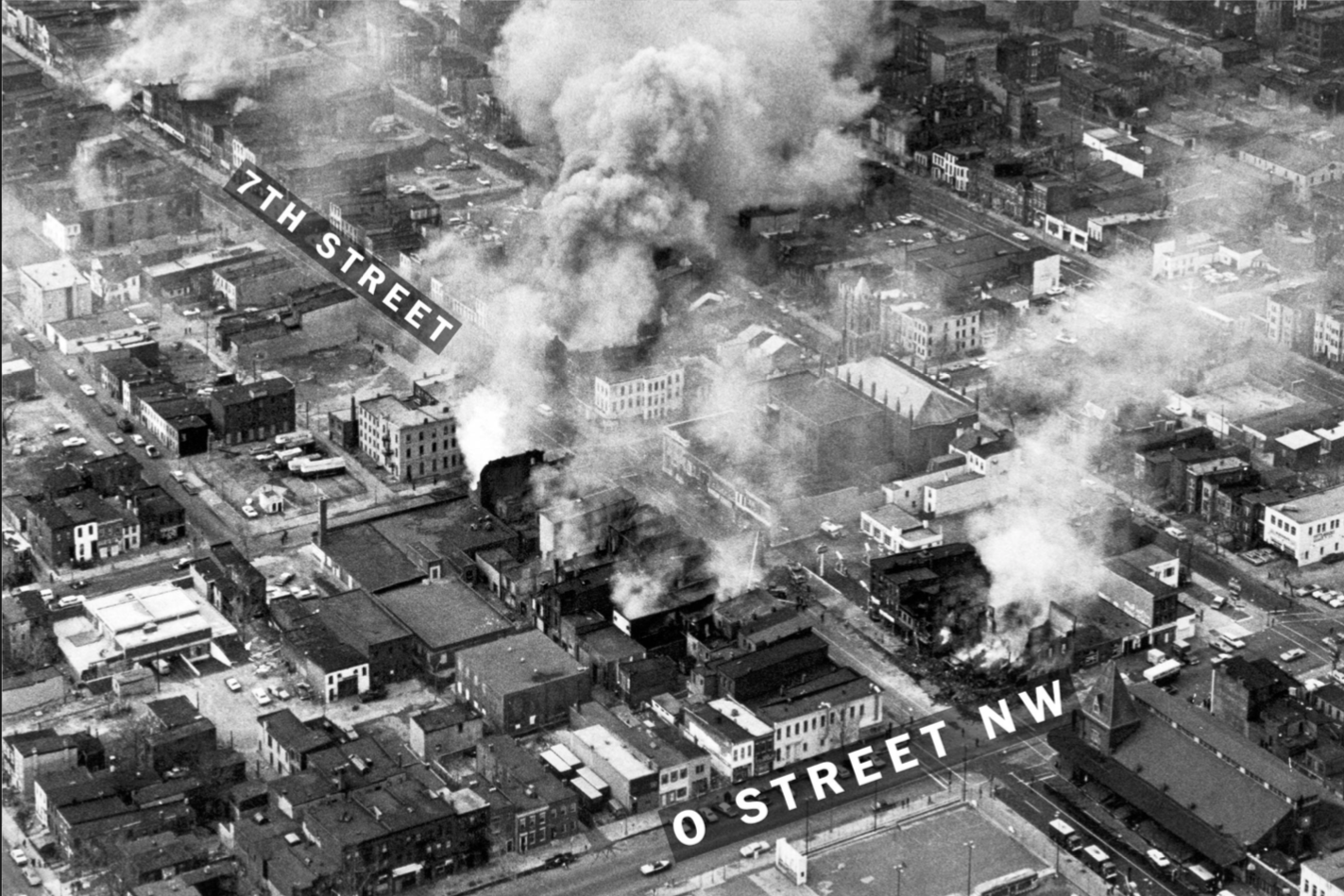
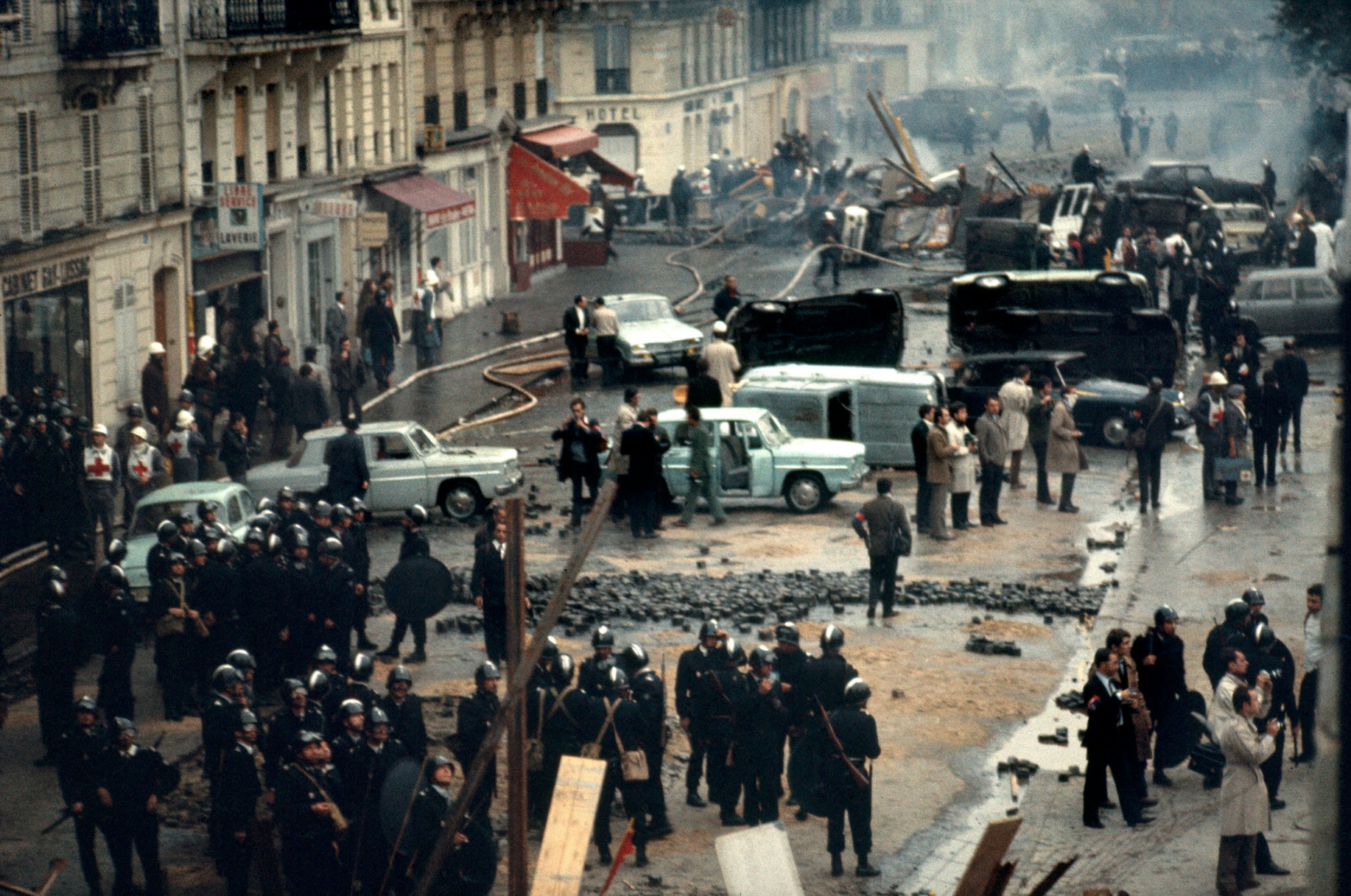
Five different cities were studied, with situations varied in different levels of disorder. In Paris, part of the city was taken over, occupied by student protest and worker strikes. In Prague, political freedom was quashed by a military response, with tanks. London’s protests were granular, even calm. Chicago had both political protests and, along with Detroit, race riots of a totally different character. In each, power took on a unique spatial expression, one which has largely gone unrepresented in existing literature.
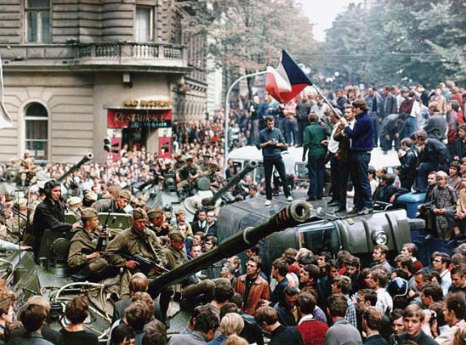
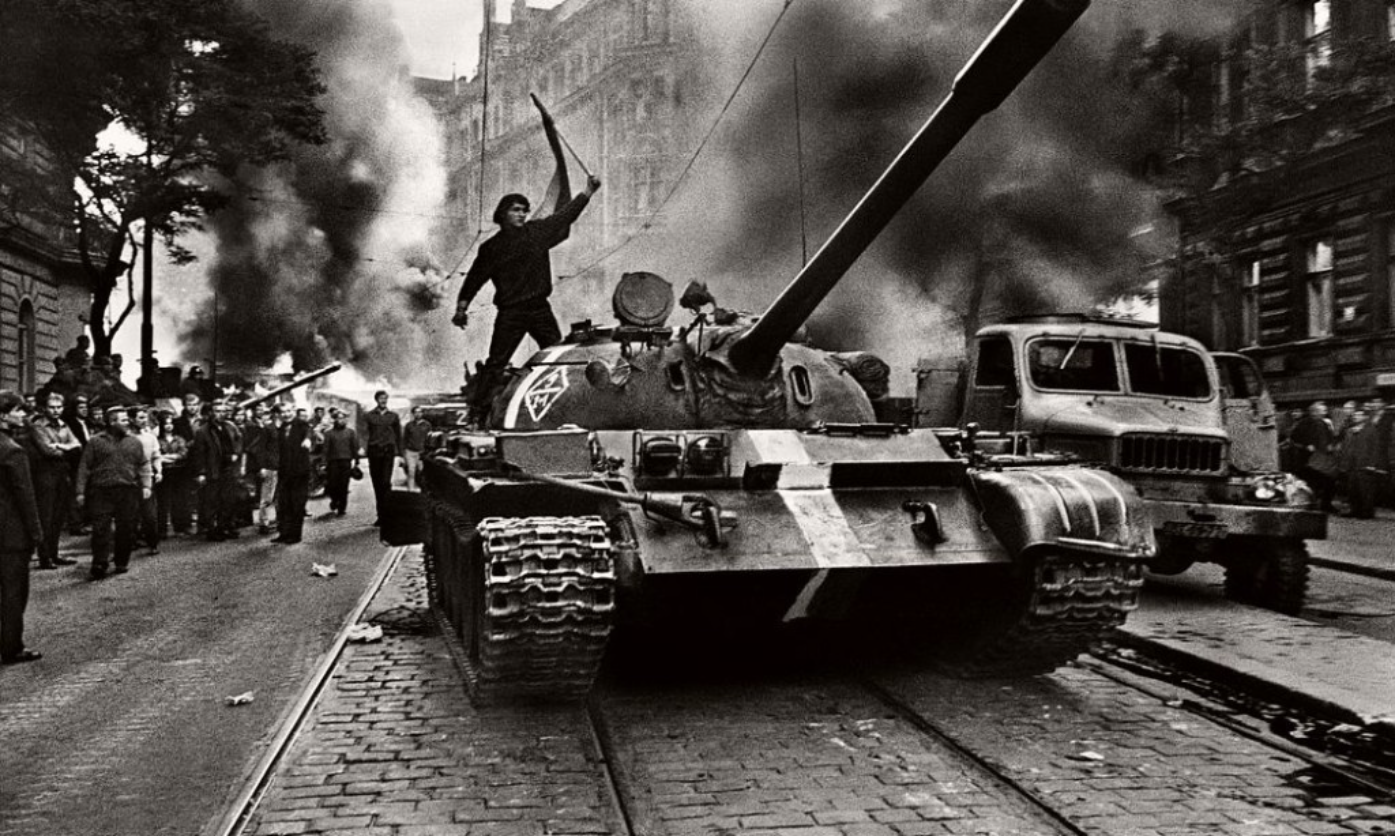
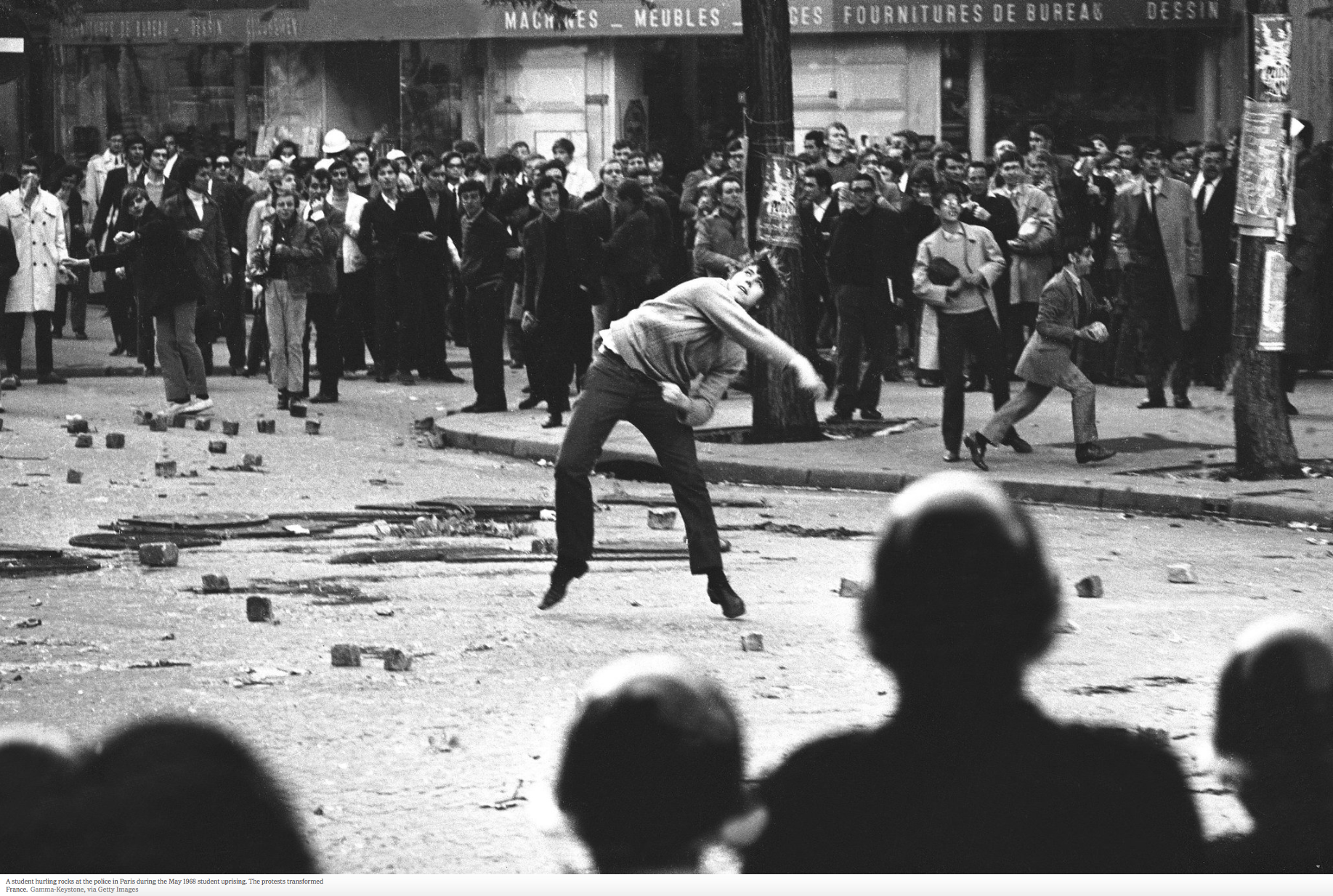
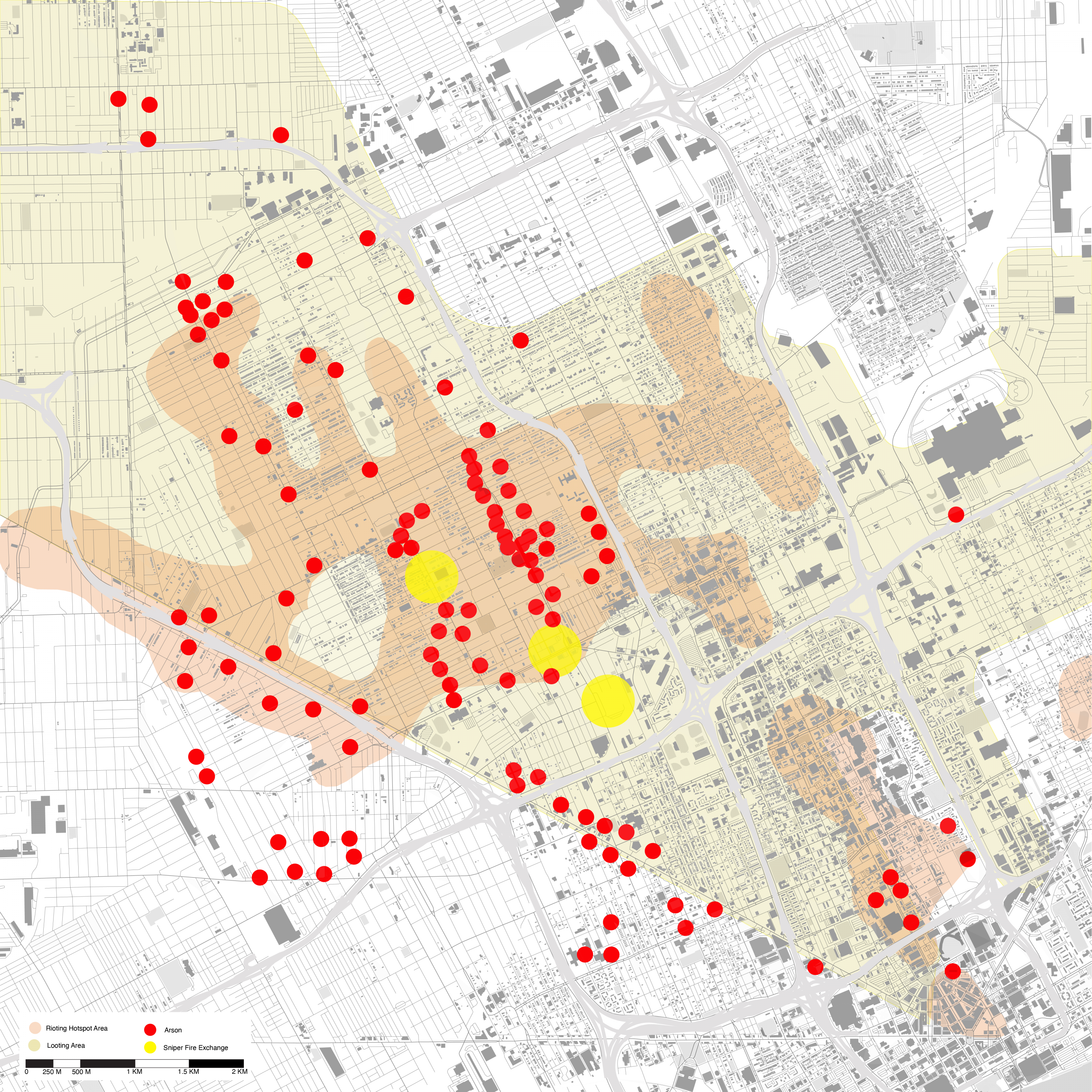
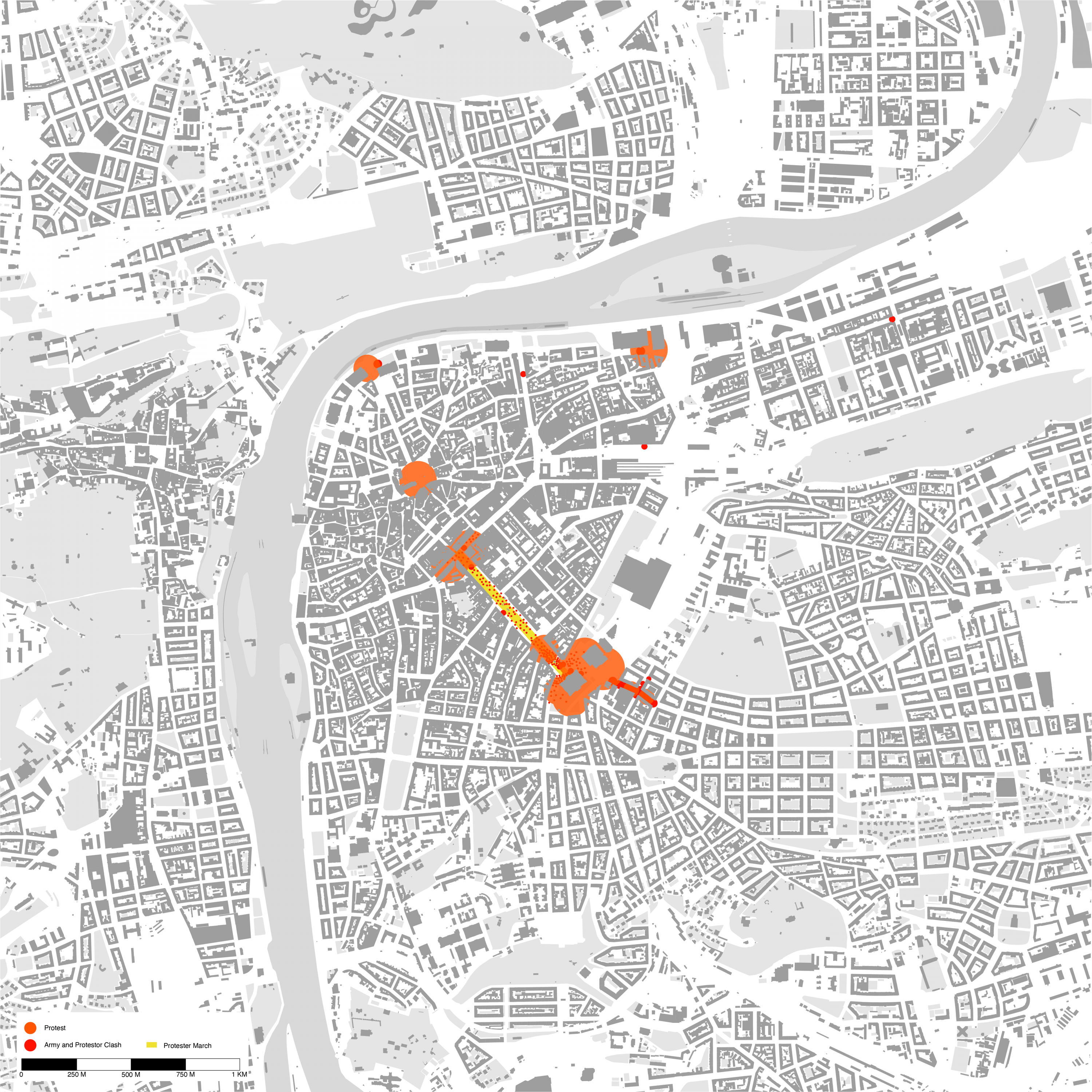
Using photos and period reports, the events of the time were mapped, their evolution shown graphically. Shown here are two, Detroit and Prague. Detroit was a series of individual and almost random events, whereas Prague was more structured resistance to the arrival of the military occupation with tanks on the main streets.
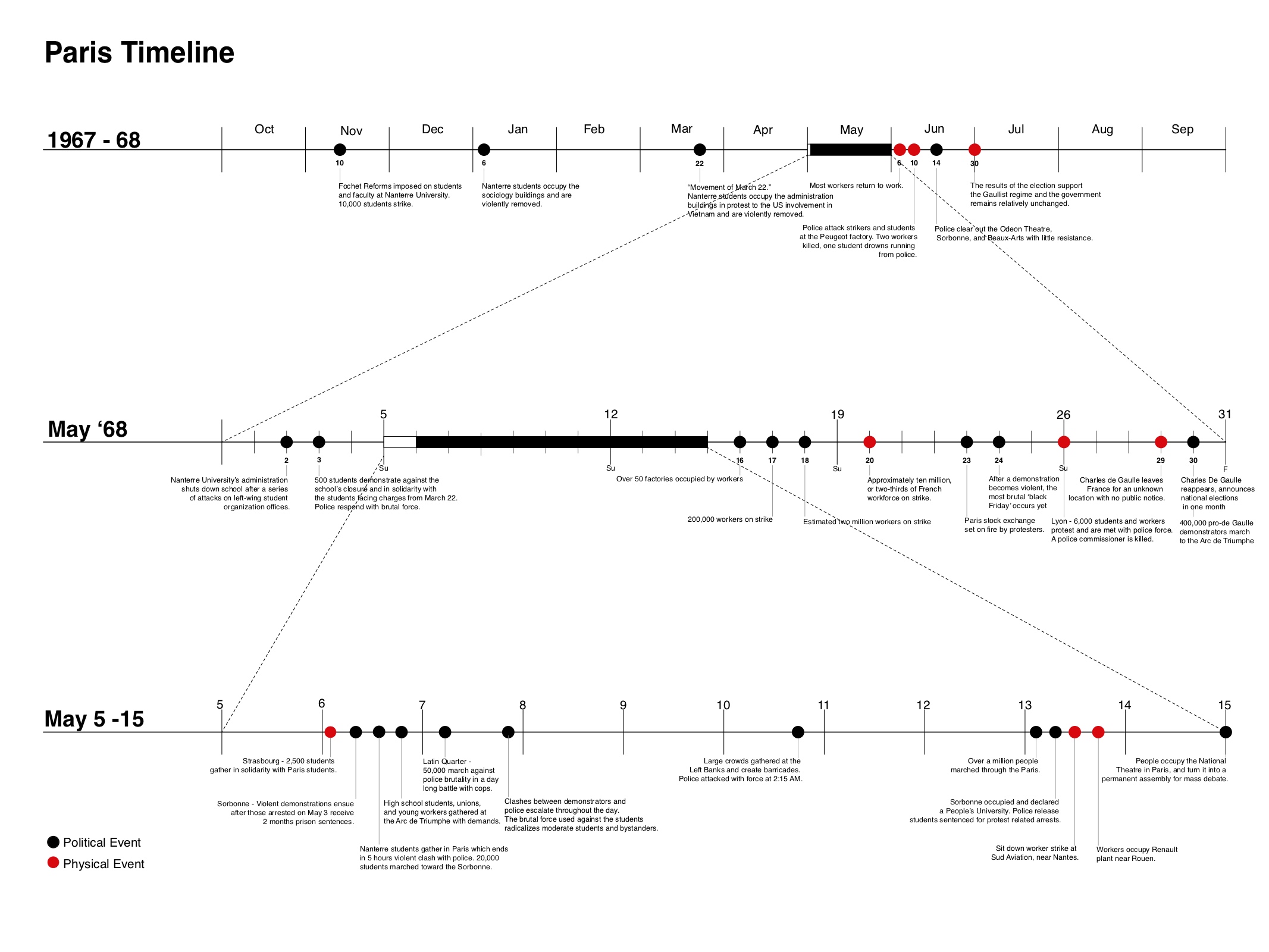
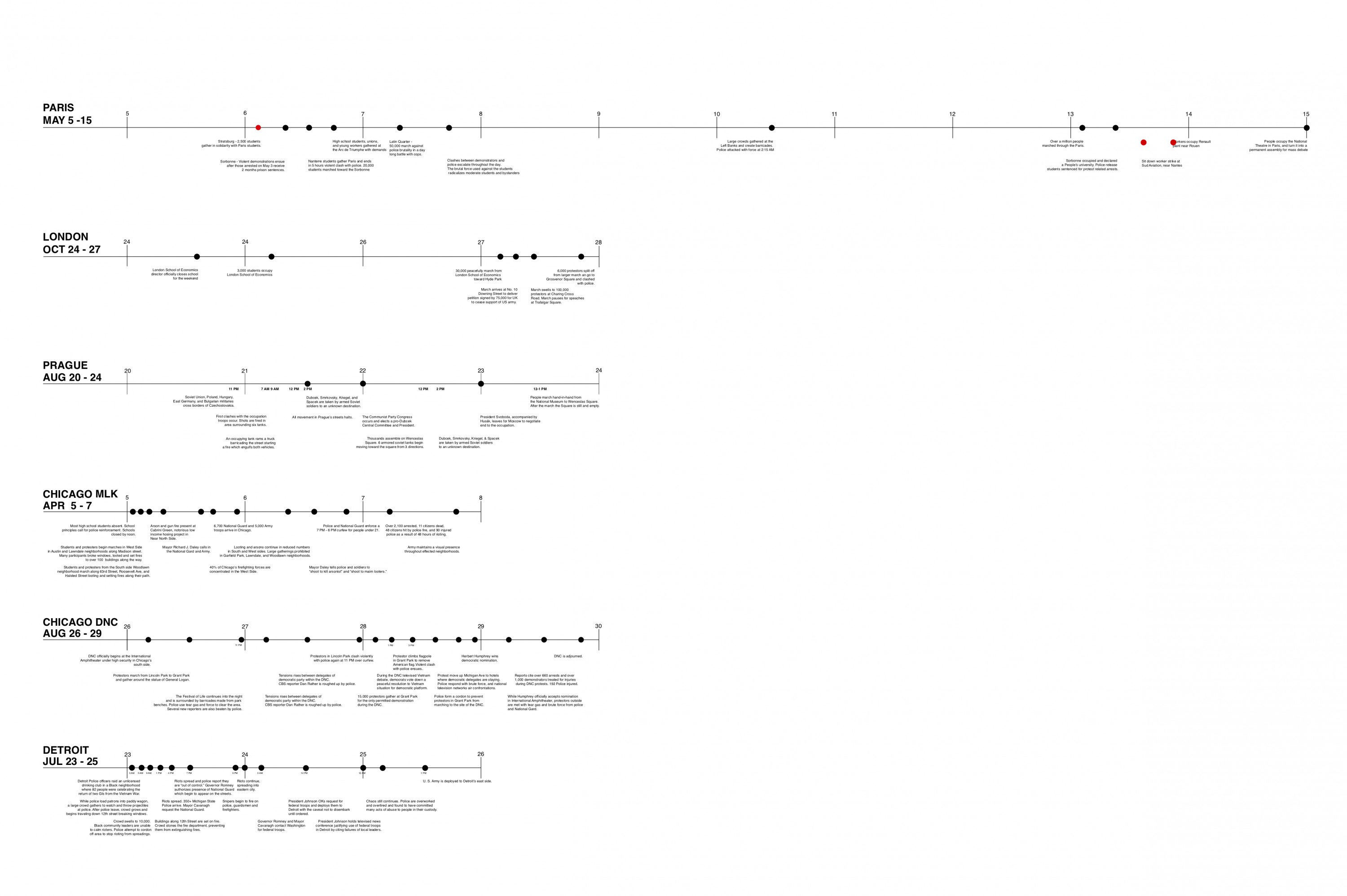
Timelines were prepared for each of the protests. Two are shown - events in Paris throughout the month of May, and then a comparison of the events in different cities. Both political and physical events were documented.


Documentation of crowd activities was prepared showing crowd behavior in the city. In some cases, a time sequence was shown, in others, the focus was the relationship of the crowd to different physical conditions.


The 1960s were a period of dramatic cultural change. These “cultural narratives” were prepared based on public media of the time for both the Paris occupation and more generally, of the United States. Two examples are shown - the Paris narrative is based on posters prepared and printed as part of the occupation; the American narrative uses record covers of the time to capture the more popular interests of the period.