- Urban Design
- Projects
- Environmental
Environmental
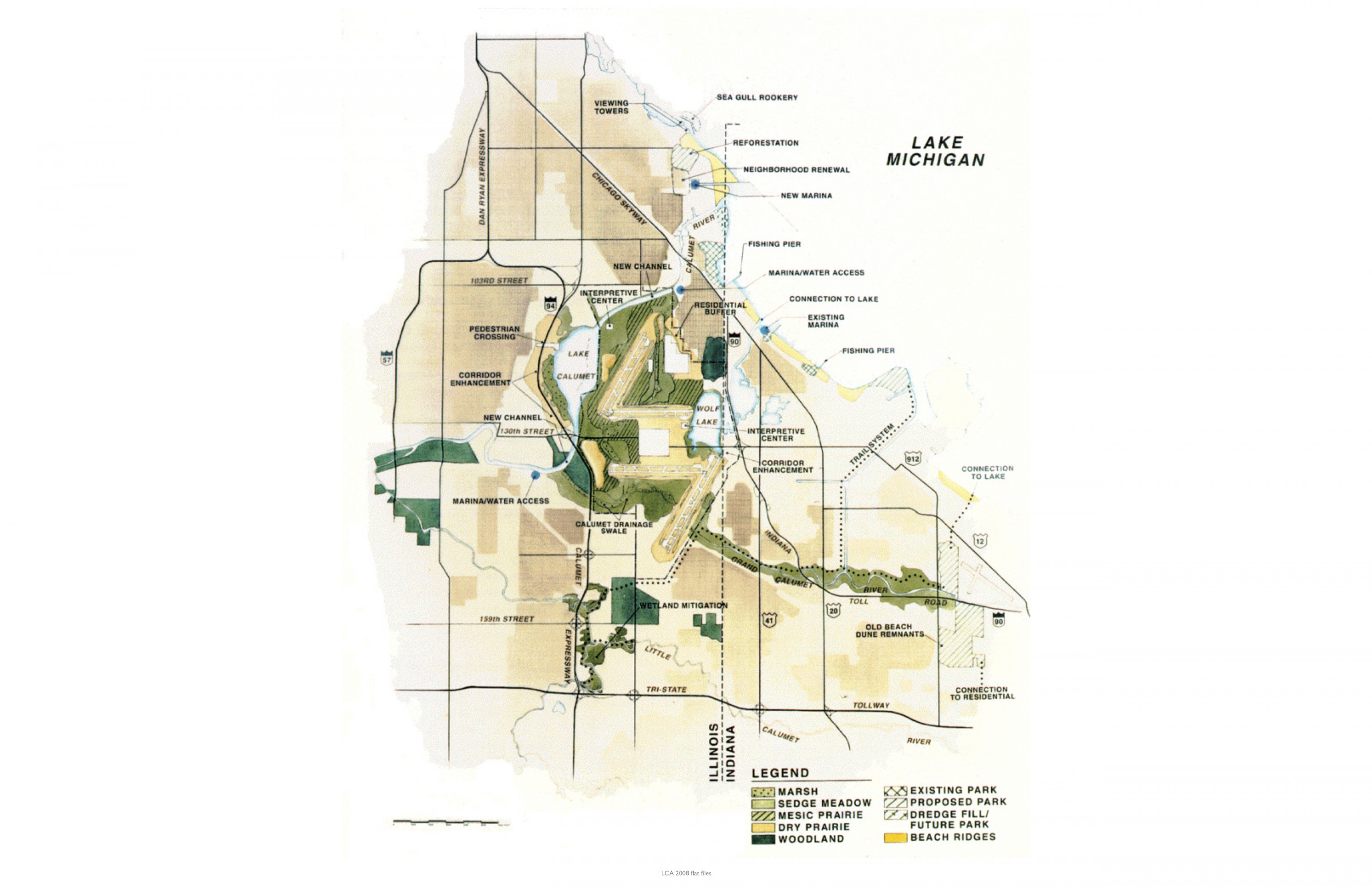
Paralleling planning for a new airport, the City of Chicago commissioned an independent team of six leading environmental planners and thinkers to develop a regional environmental plan, independent of any political, fiscal, or transportation concerns. Their plan was not insignificant, estimated cost of $1 billion; and most improvements were in the first phase of the airport plan, not delayed as is typically done. The environmental plan offered a regional perspective on how the airport and natural resources could work with, and in some cases, reinforce each other’s goals.
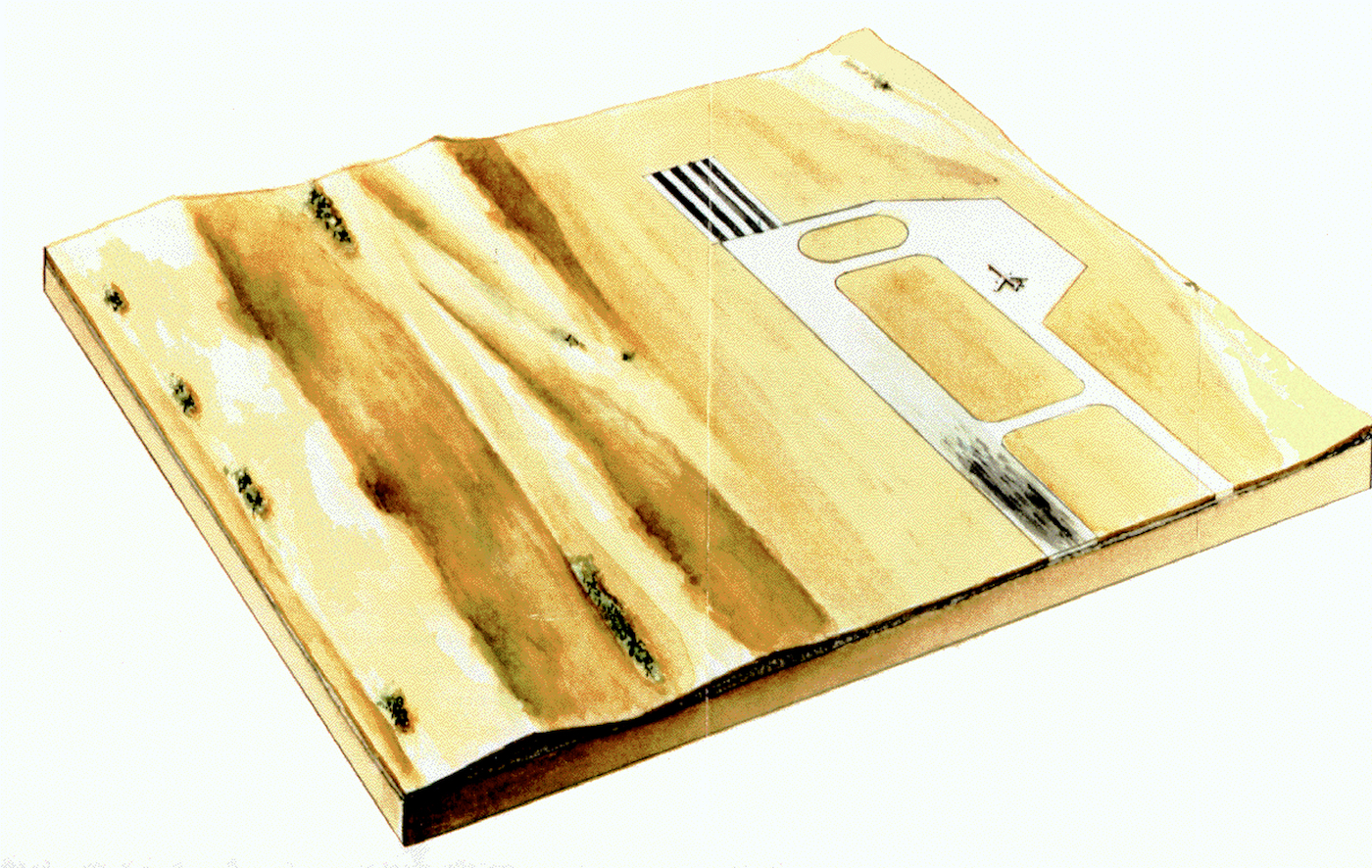
A return to the natural “dune and swale” landscape was proposed, in contrast to the existing landfills and helter-skelter land uses.
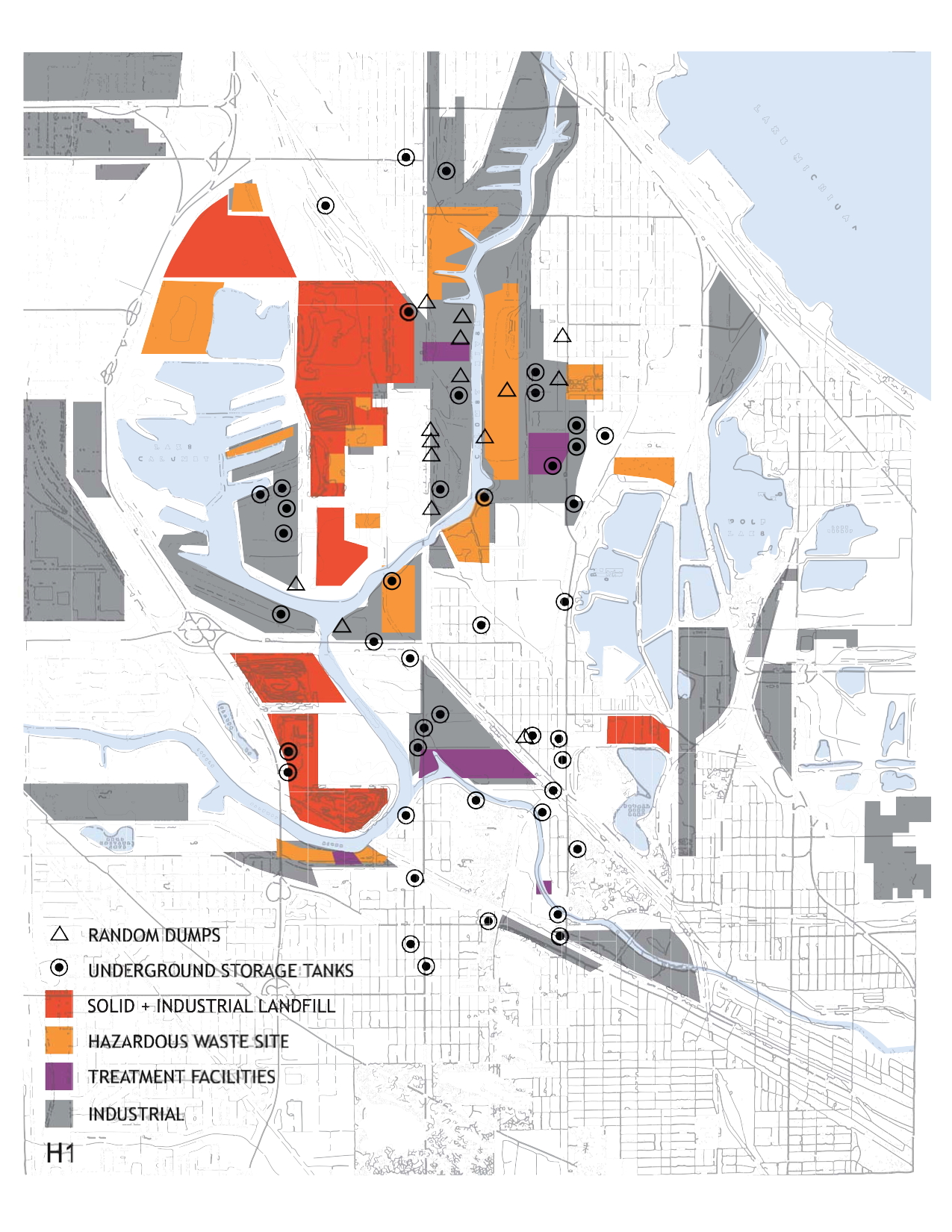
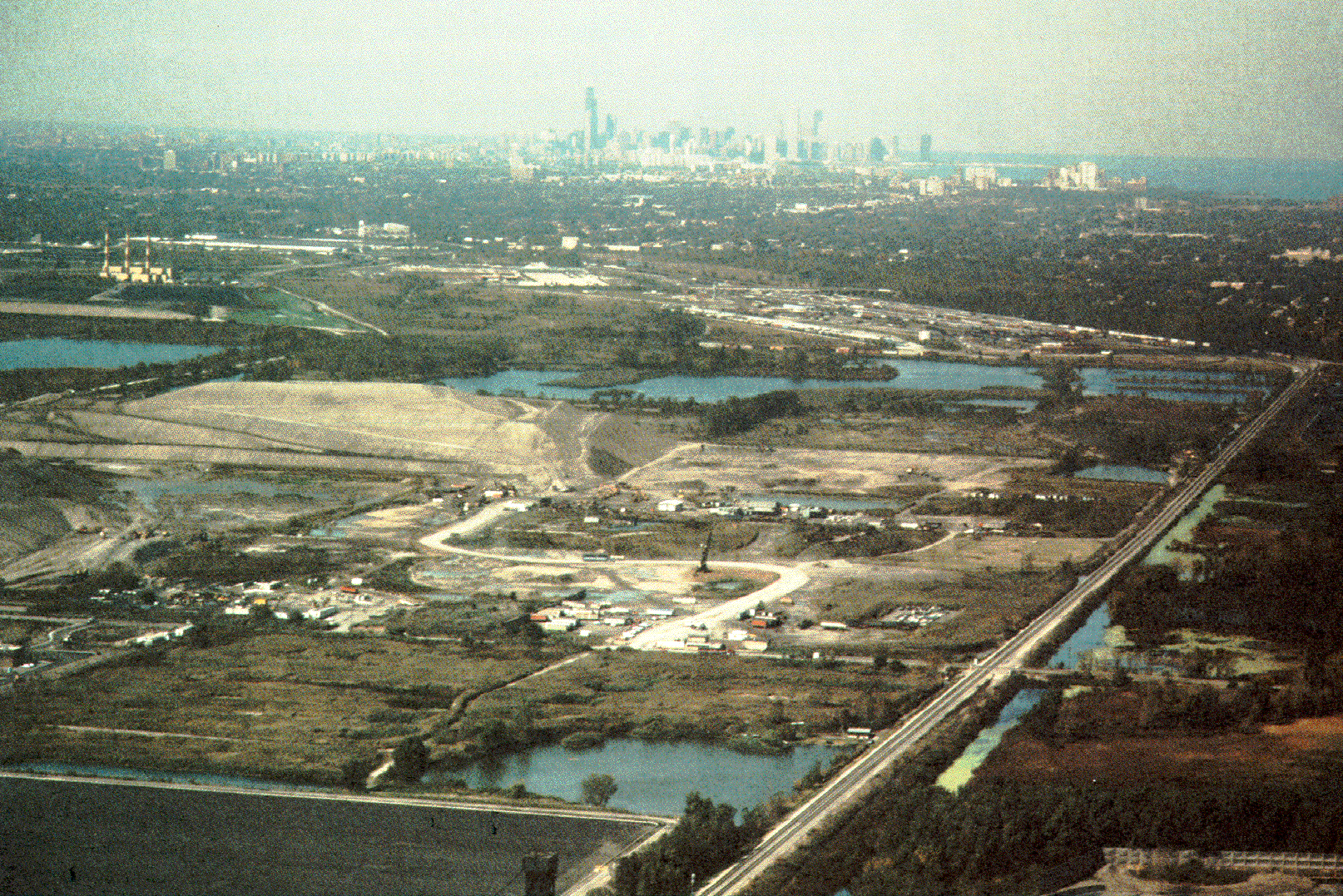
Waste was found existing all over the 10,000 acres on the southeast side of Chicago. It was the residue of decades of mismanagement of the land, with both structured and unstructured waste of all types spread throughout. Without some centralized effort, it was feared this would never get gleaned up.
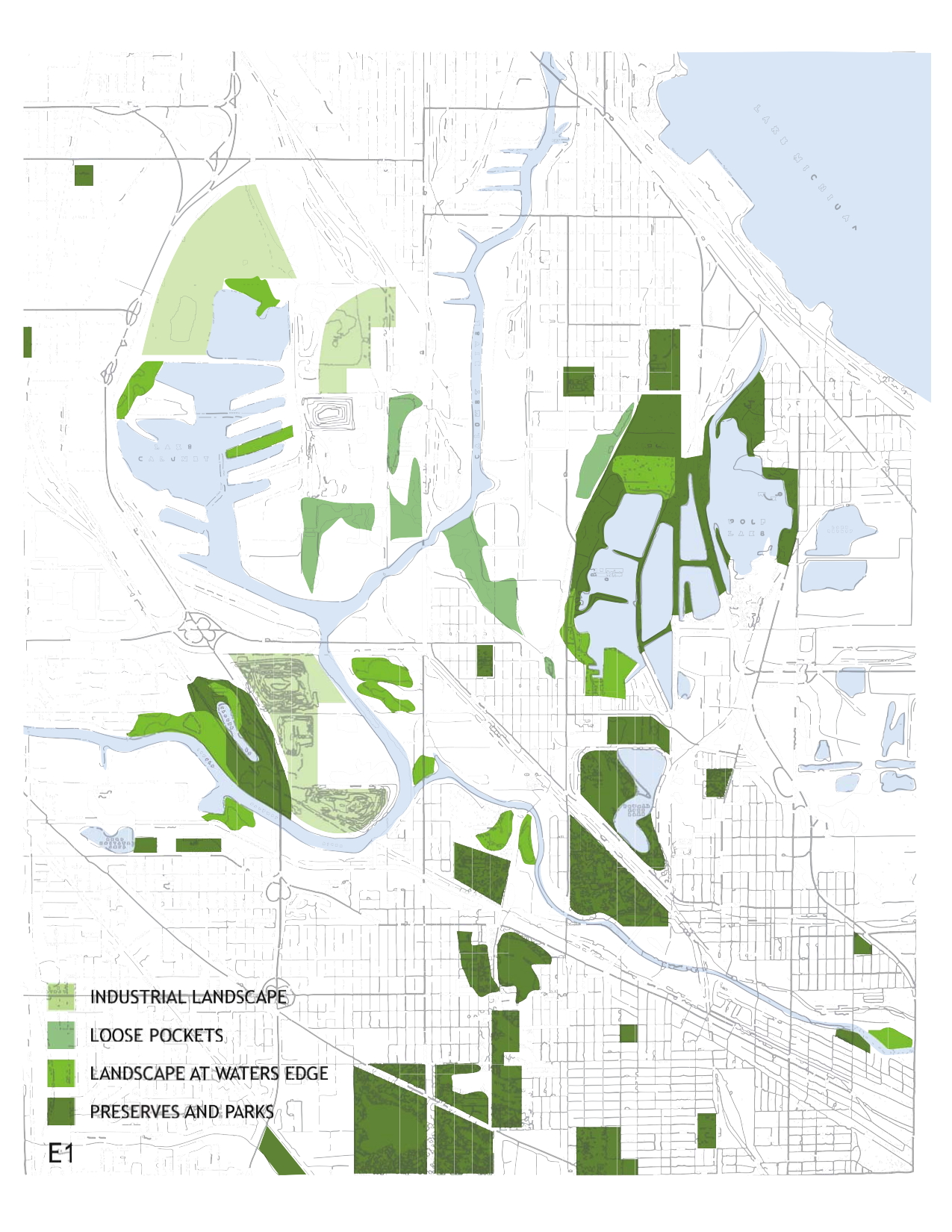
Existing green landscape was fragmented and was in peril without any protection.
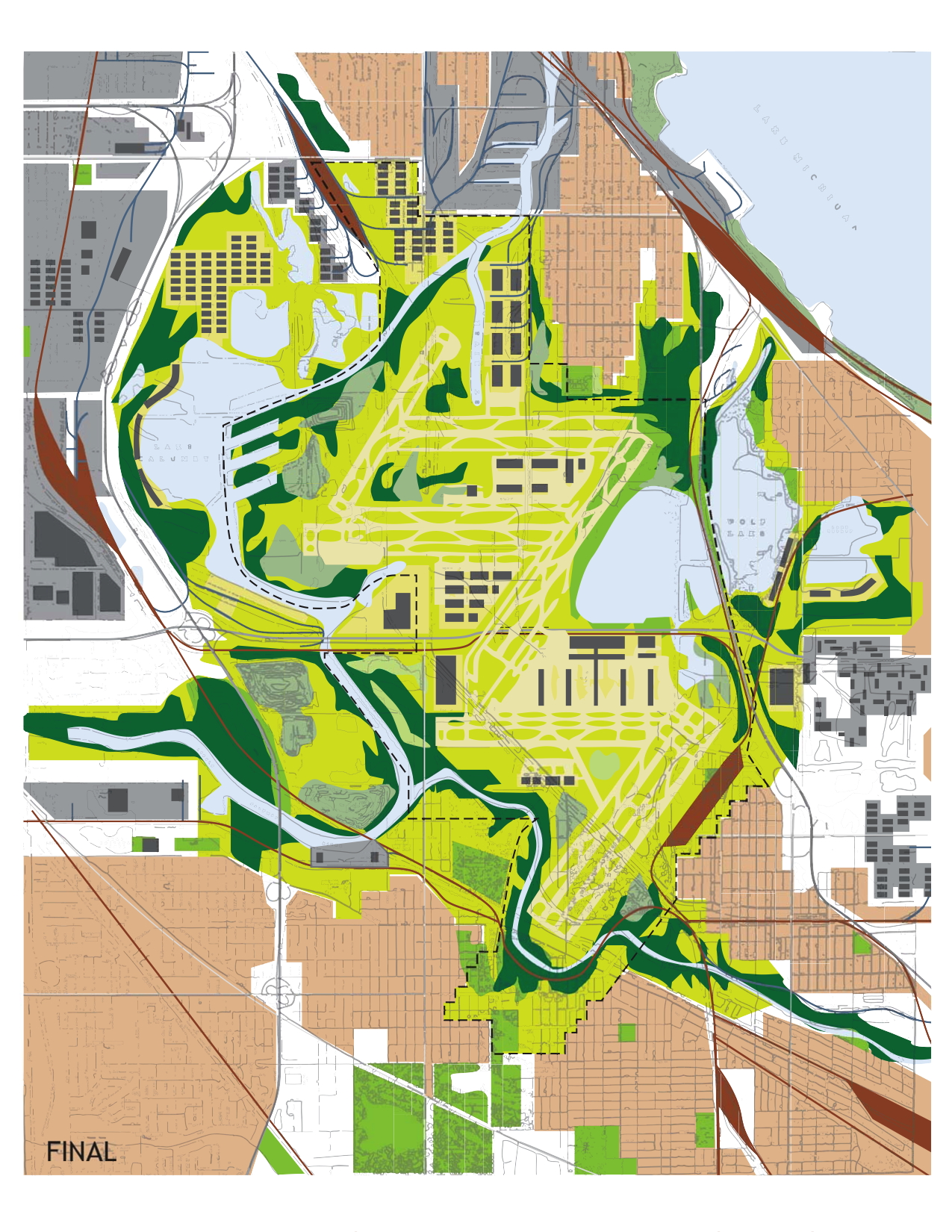
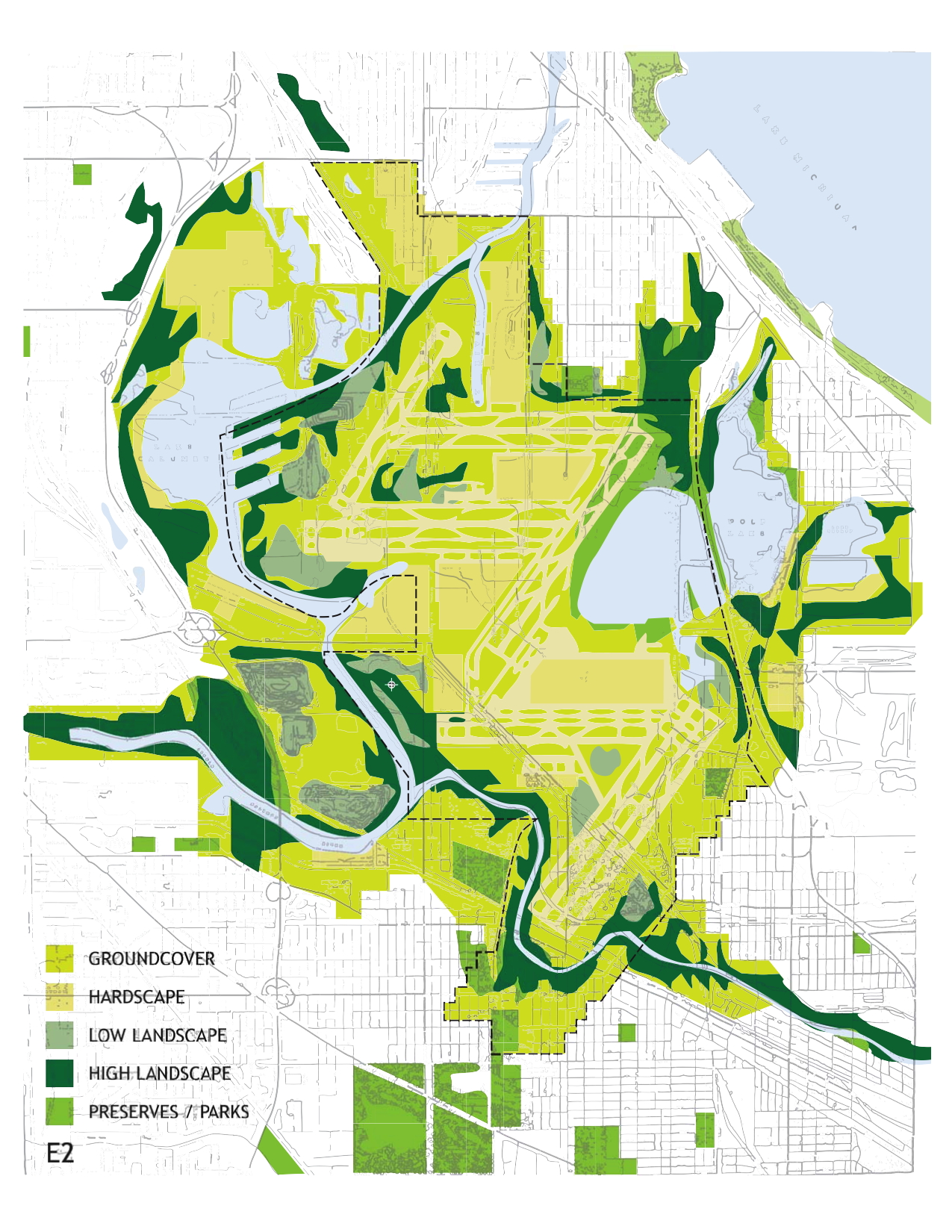
The goal was to organize, connect, and protect the landscape in and around a large multi-modal transportation facility. Anchored by the airport, the larger landscape was to planned to address a broader set of environmental and natural concerns.
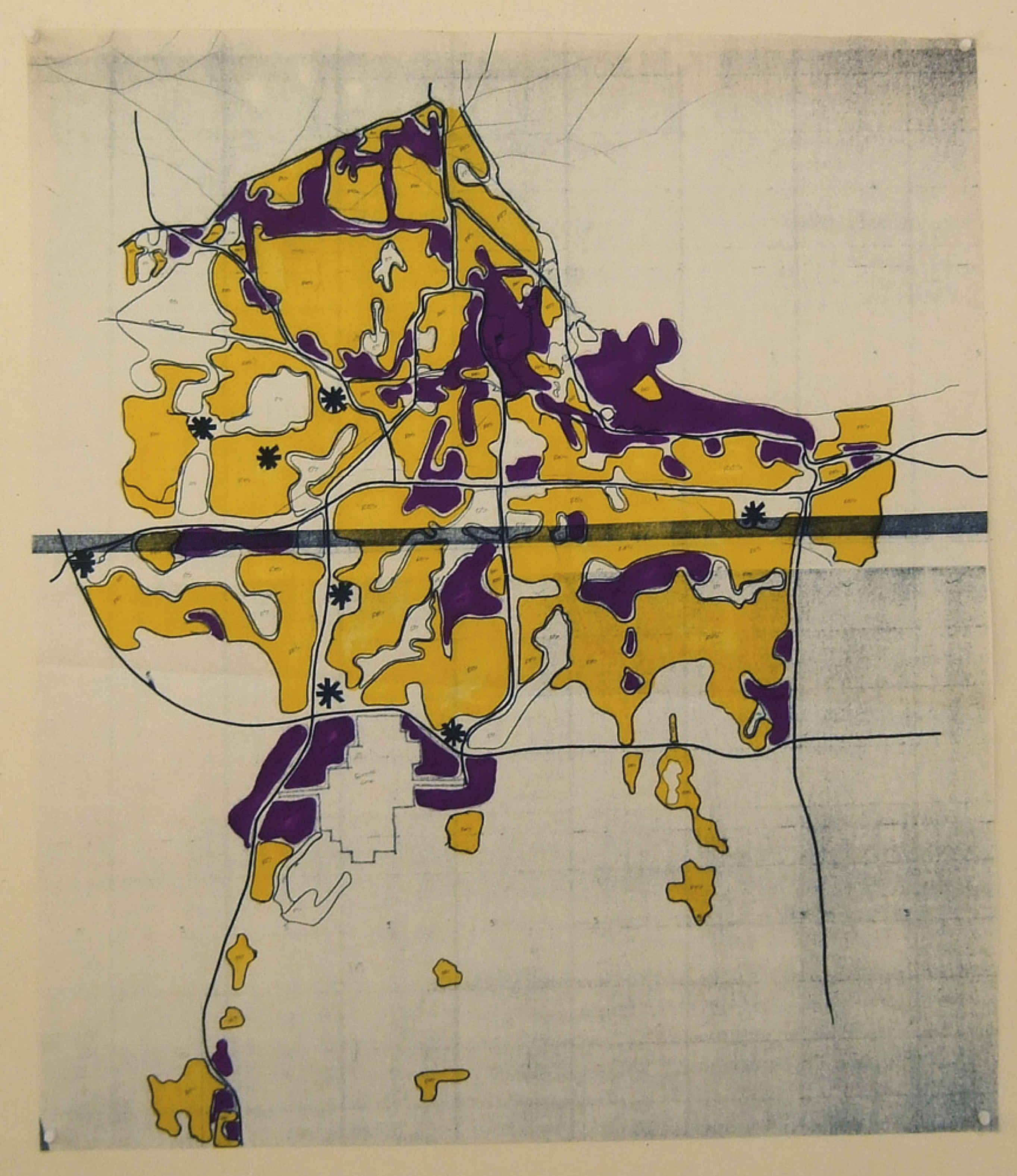
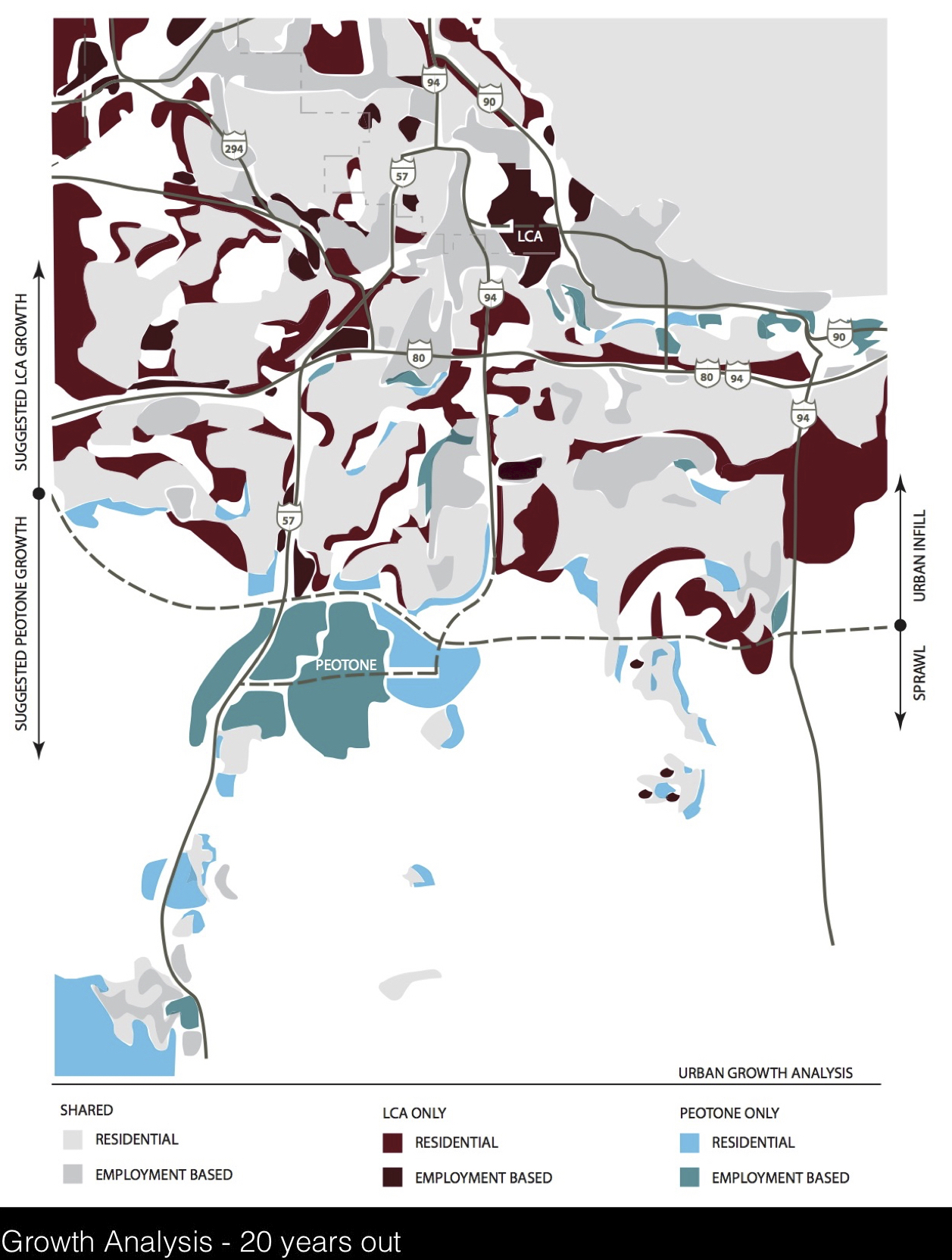
As part of the regional planning effort, projections of future development were made. The goal was to utilize existing infrastructure, repopulate centers that had lost people, and to discourage sprawl into open farmland. Comparisons of two different approaches were made, as shown: red for increased urban development and density, and blue for a scheme with more sprawl, and not preferred.