- Teaching
- Value
Value
Consider architecture as a “value-added” proposition, that is, the work of architects and architecture create or improve value. What then is the relationship between architecture and value? How can value in architecture be assessed? How and when do architects make value?
Architecture and value are studied both topically and through examples and case studies, including strategies and approaches successfully used by architecture in the interface with real estate and development, including value:
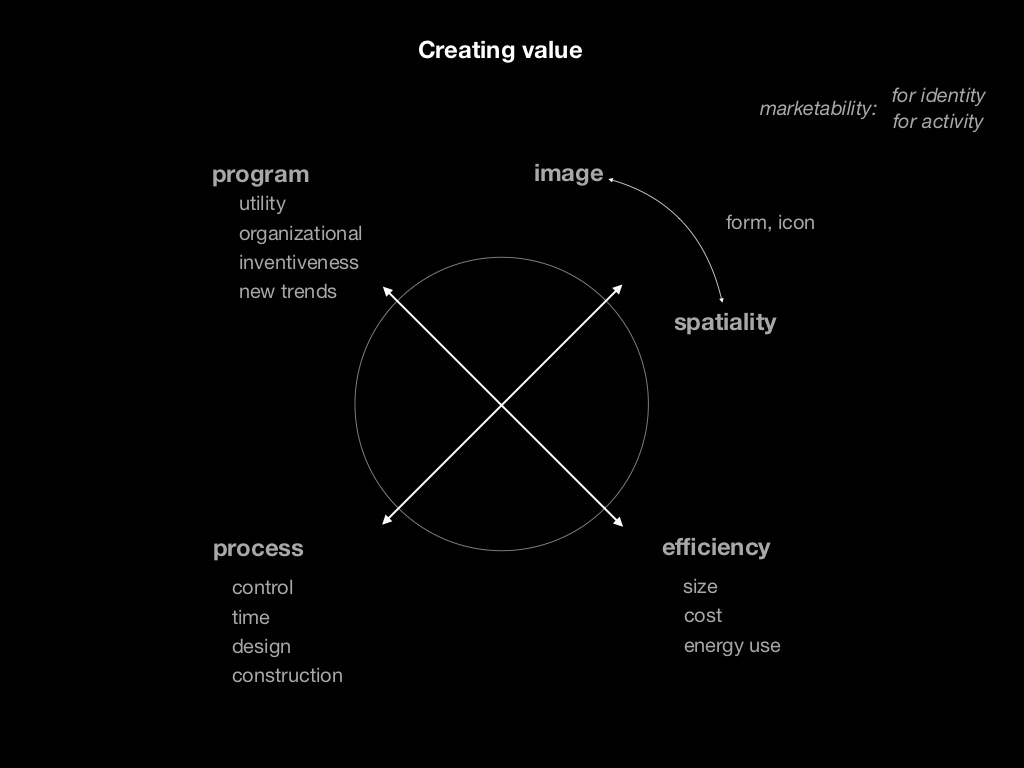
- in terms of economy and efficiency, as typically measured within the profession.
- from the program with better use or fit, or by anticipating societal changes.
- by working beyond the profession, as developer or as contractor, to improve project performance.
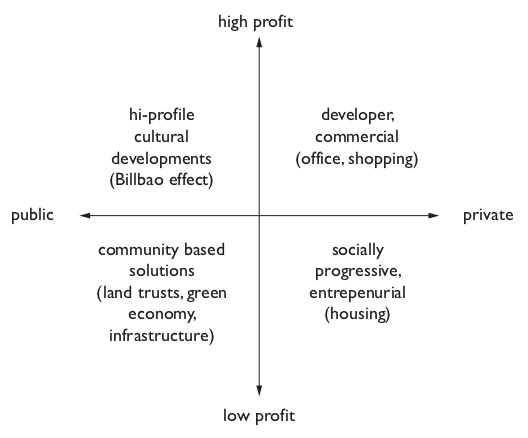
Two explanatory diagrams are shown below. The first outlines explorations - public vs. private, and high vs. low profit.
The second describes ways value can be created: by efficiency, from the image (with form) or with spatiality, from the program, or lastly, by control of the process and time.