- Investigations
- Re-creation
- Re-creation
Re-creation
A number of Bertrand Goldberg projects have been recreated in 3D models. In some cases, the projects were never built; in other cases, the models were made to study massing or specific details.
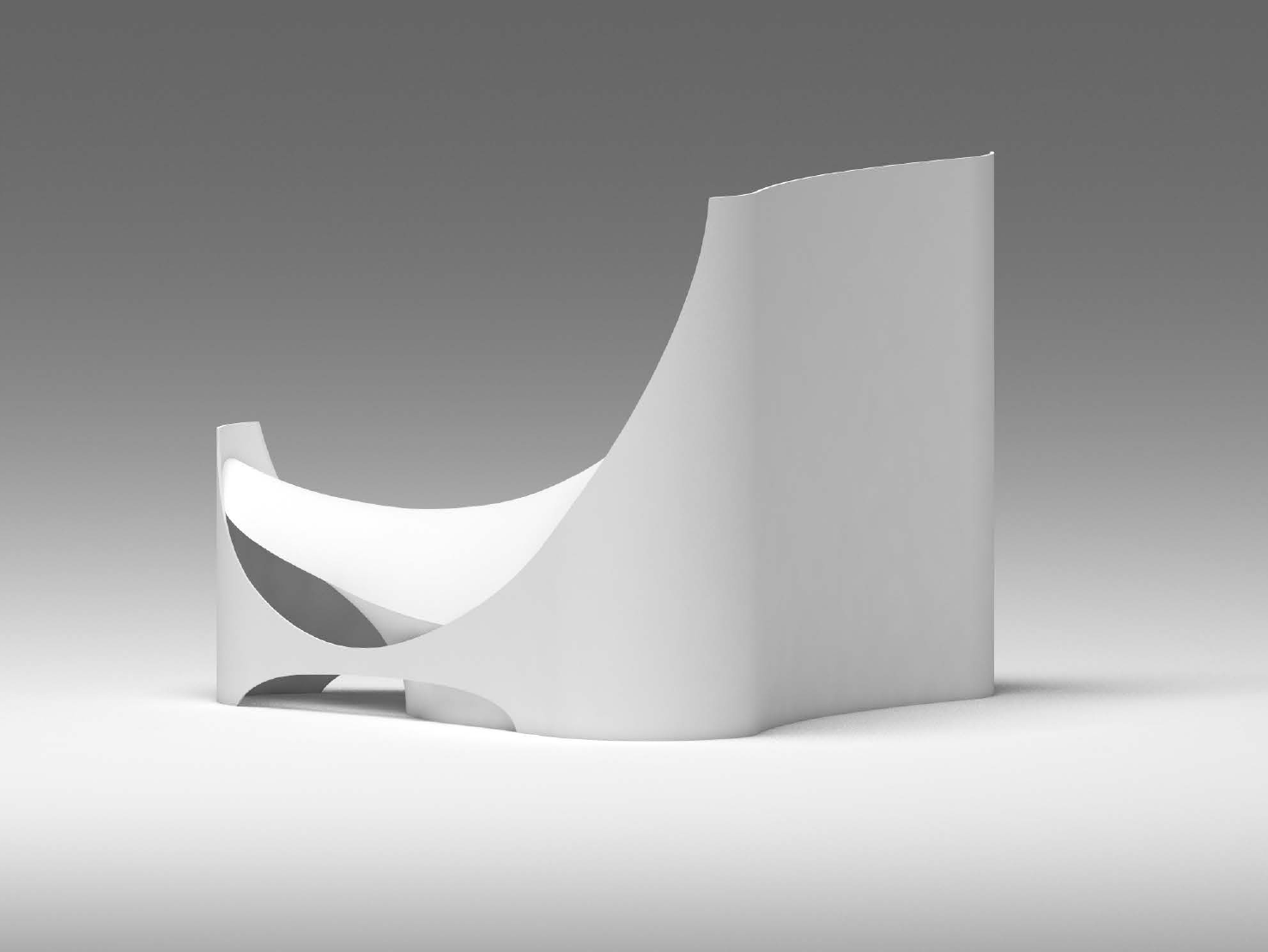
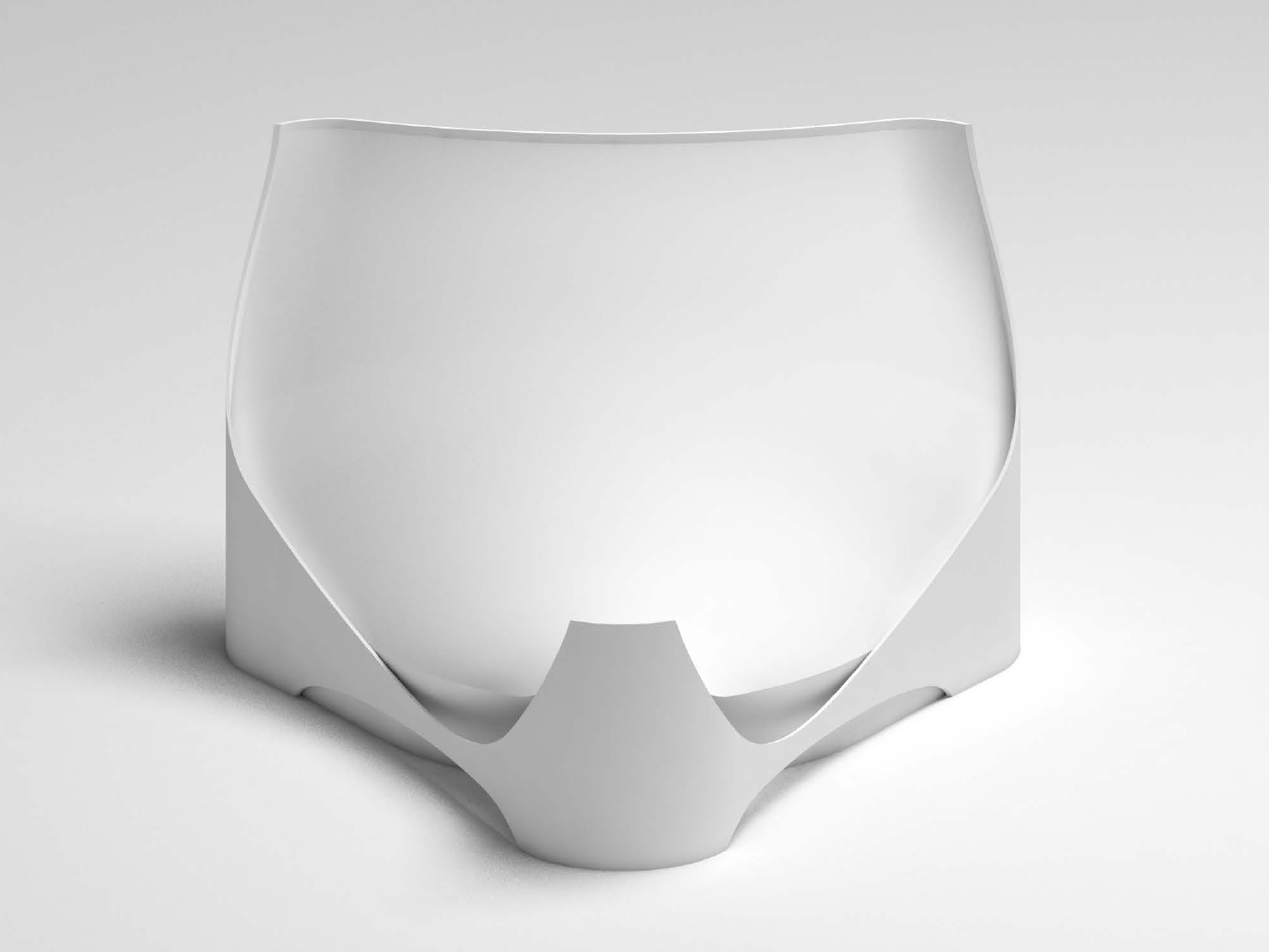
Largely unknown, this rare competitor entry was prepared by BGA c.1964. The plans are well documented, its 3D massing only known from several sketches. Many years ago, Dick Binfield (a main design architect at BGA, from about 1959 on….) said it was seminal. The sketches appear to show a concrete shell (vertical walls), trimmed in height, with a lightweight roof structure hung from it.
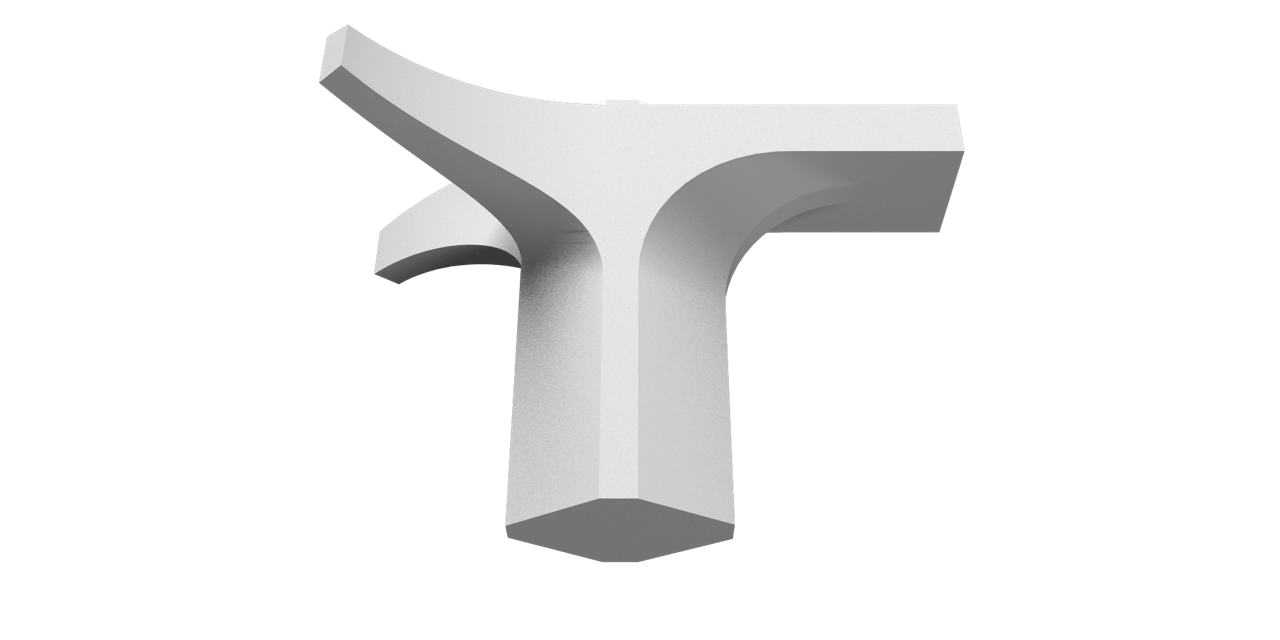
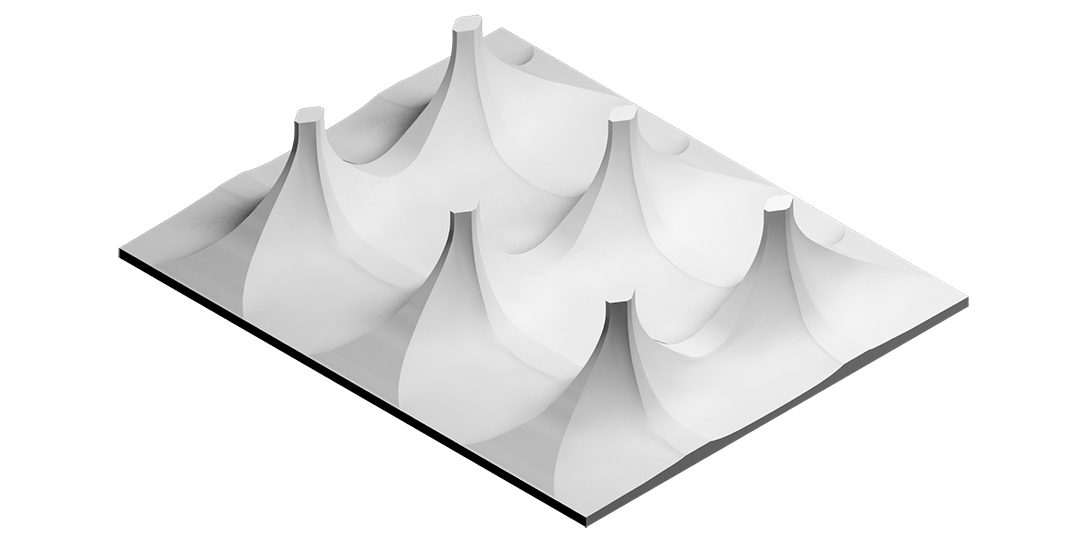
Nestled with in the Marina city complex are two very unique curved elements: the typical columns for the towers bridge between beams and the balconies; the structure of the office building is transferred to the base building column grid at the fifth floor through a series of arched vaults (shown here upside down for study). Gothic in nature, these two forms are remarkable yet relatively unheralded.
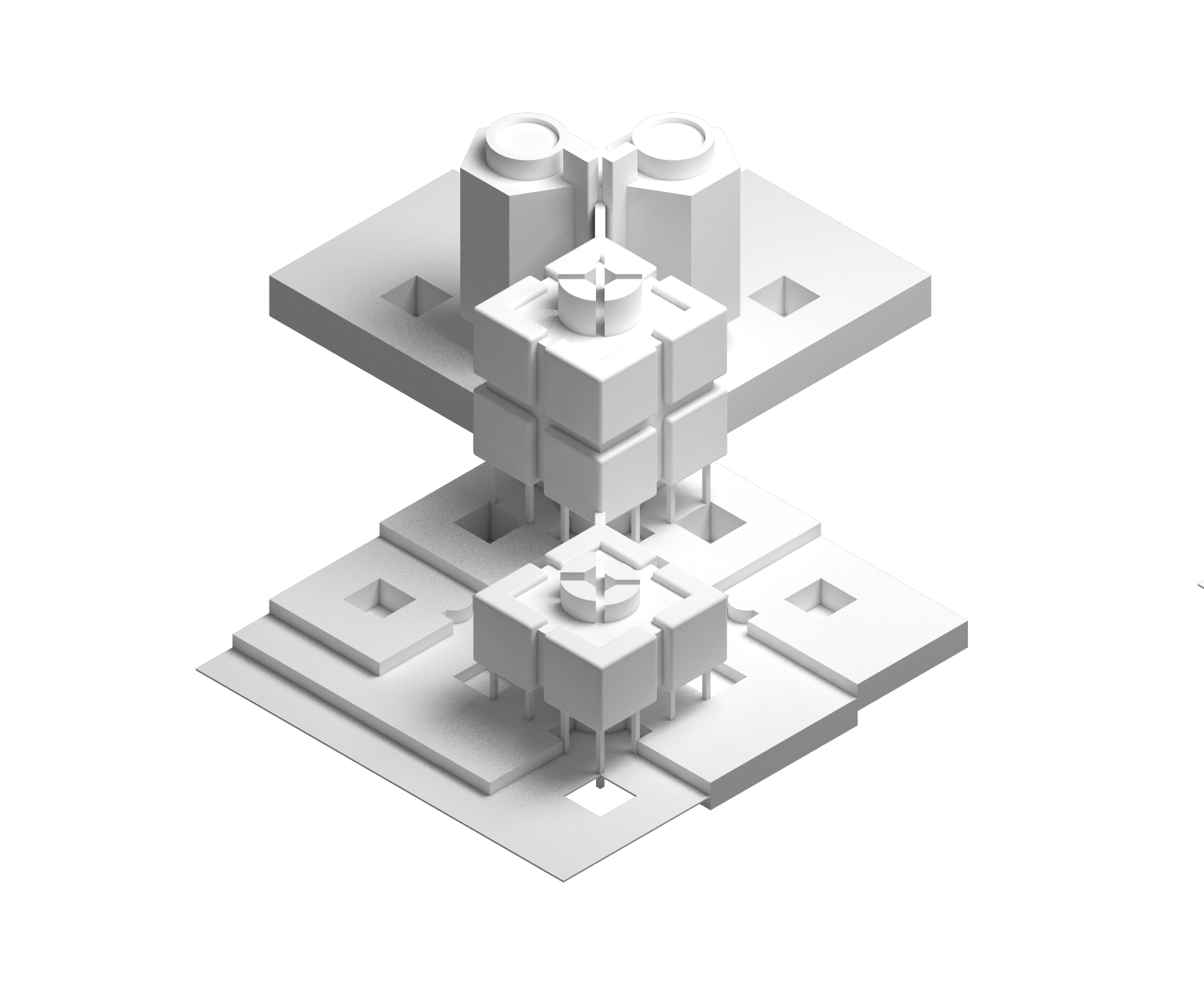
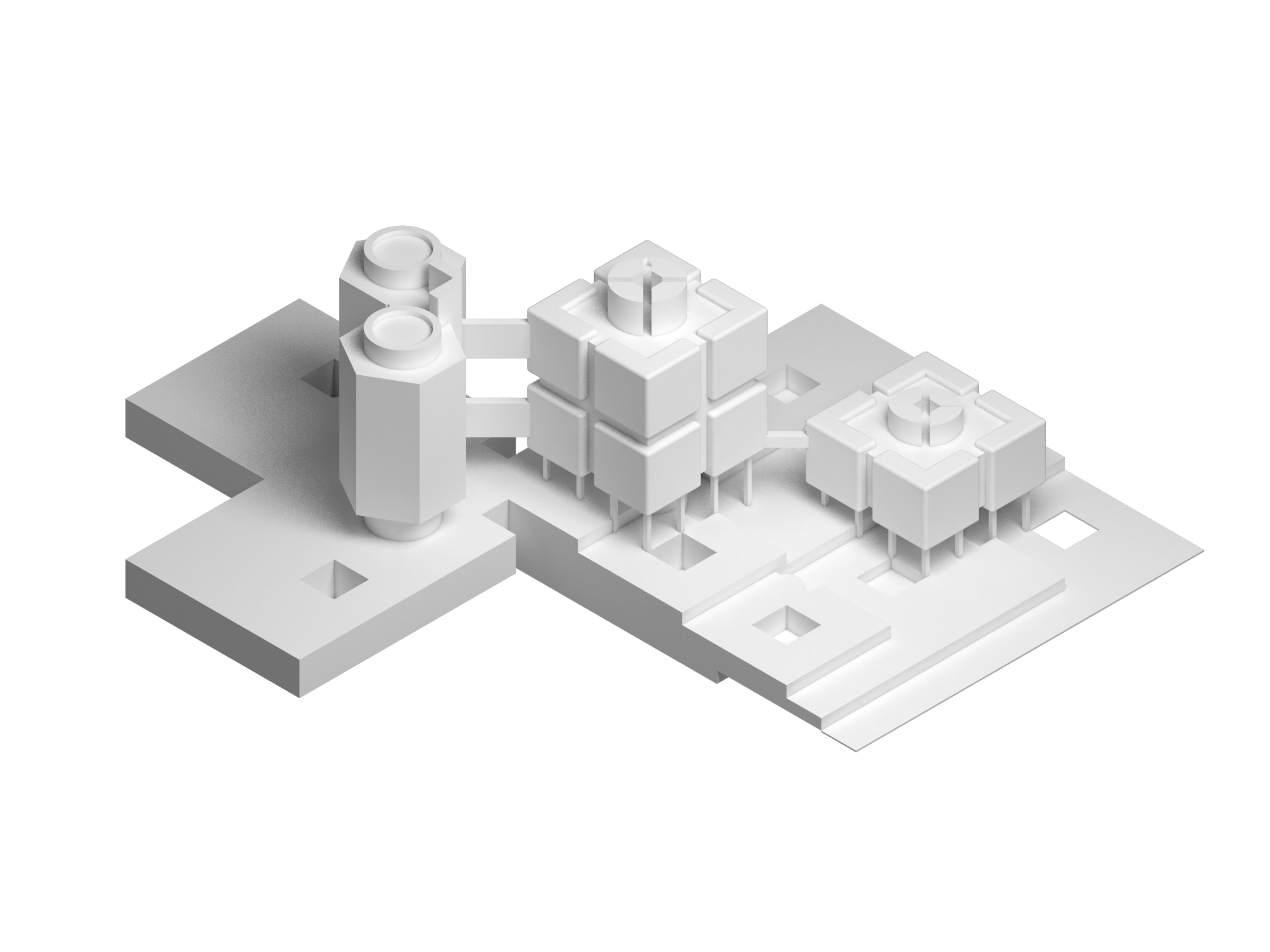
The Health Science Center at Stony Brook was the office’s largest project ever, as 2 million s.f. Little of it is known; research into its planning evolution was undertaken, and a comparison made between the original proposal and the as-built project was made. This is the massing as completed.
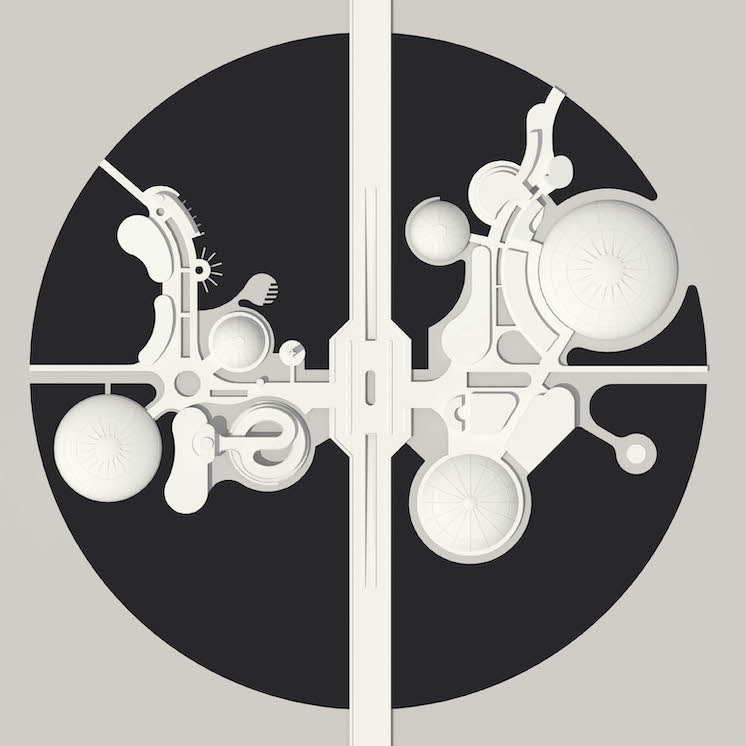
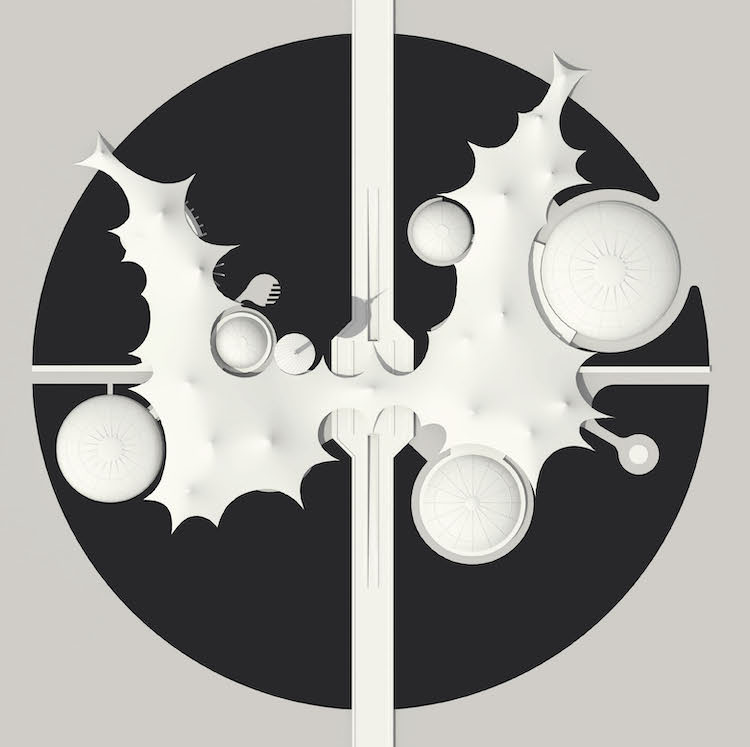
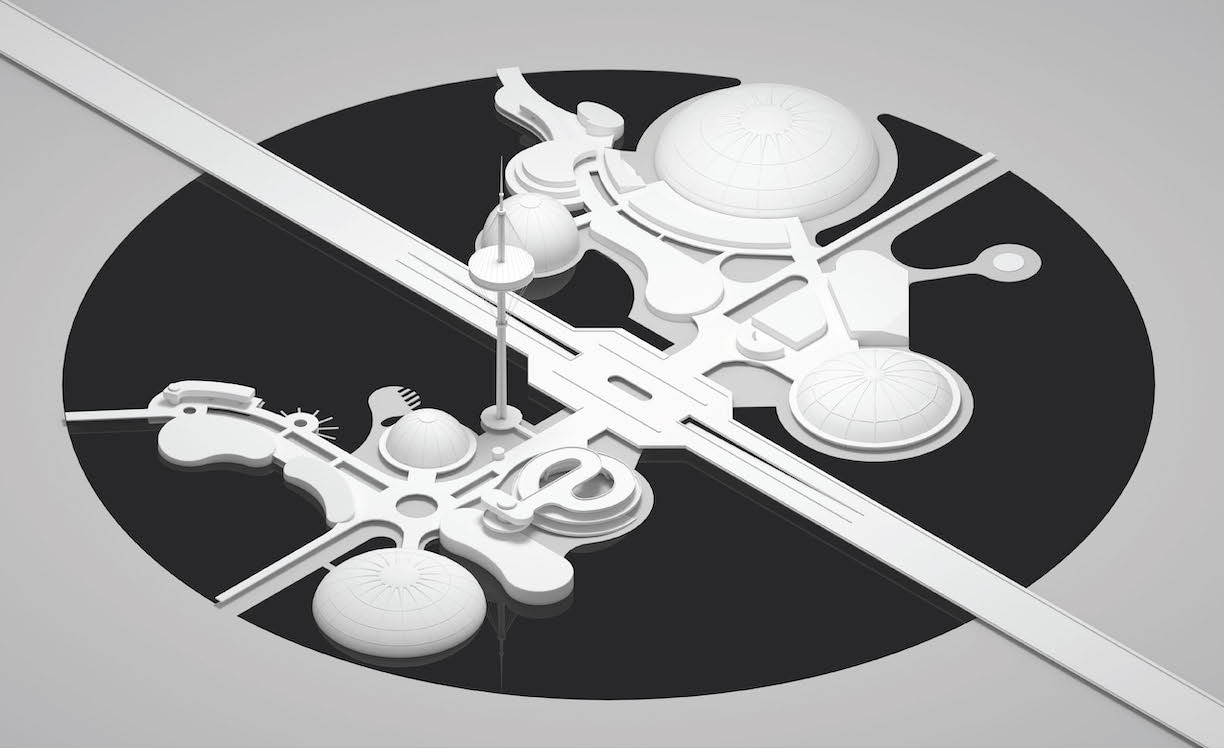
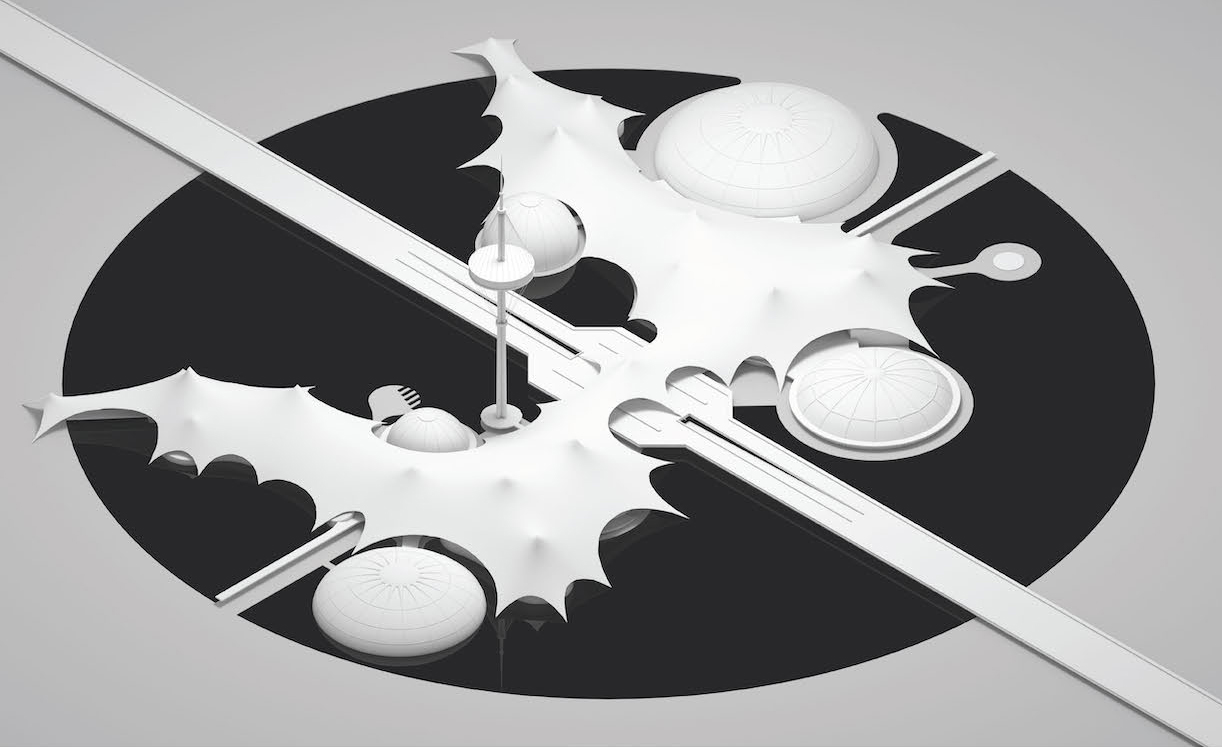
Night World was proposed in 1978 as a floating convention, exposition and entertainment center to be built in Florida marshlands near Disneyworld. A combination of tents and domes, the massing was largely only known through different perspective sketches prepared at the time. The 3D model allows more complete understanding of the plan and its massing.
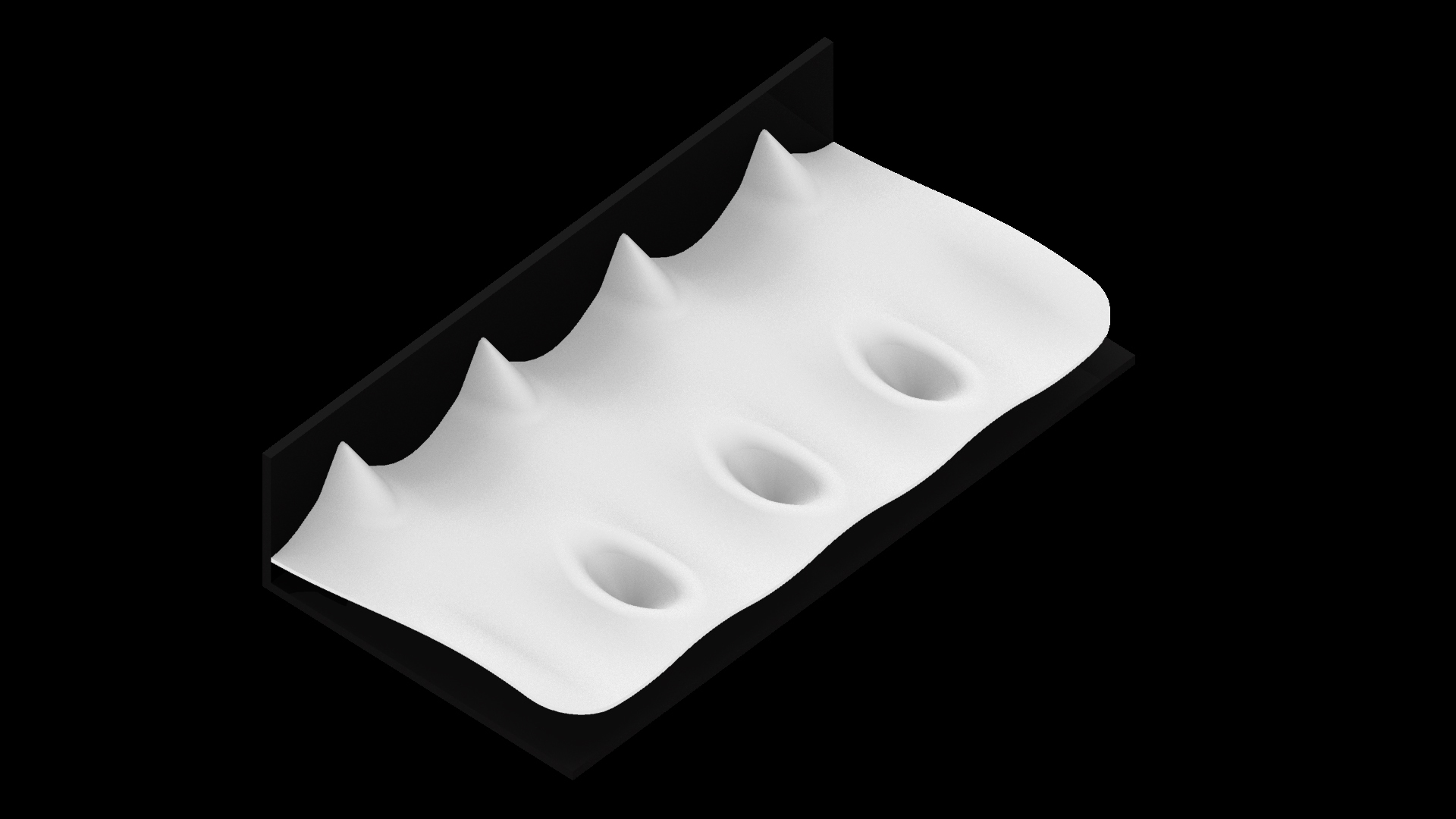
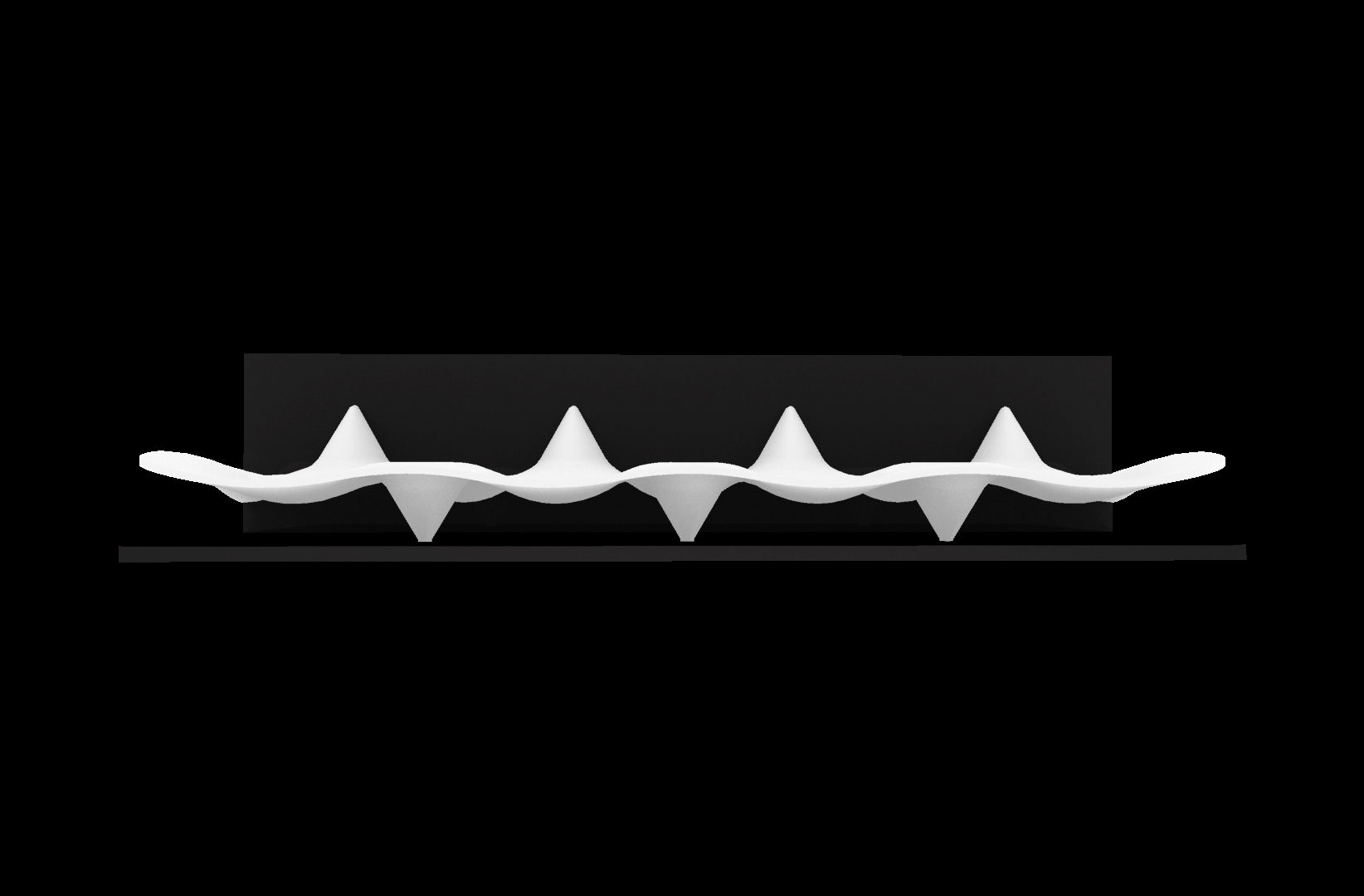
In March, 1960, Goldberg was shown in a press photo holding a conceptual structural study model, long lost and little known. A reasonable “best guess” model was prepared to visualize the model, which likely was the theoretical underpinning of the Marina City vaults at the office building.
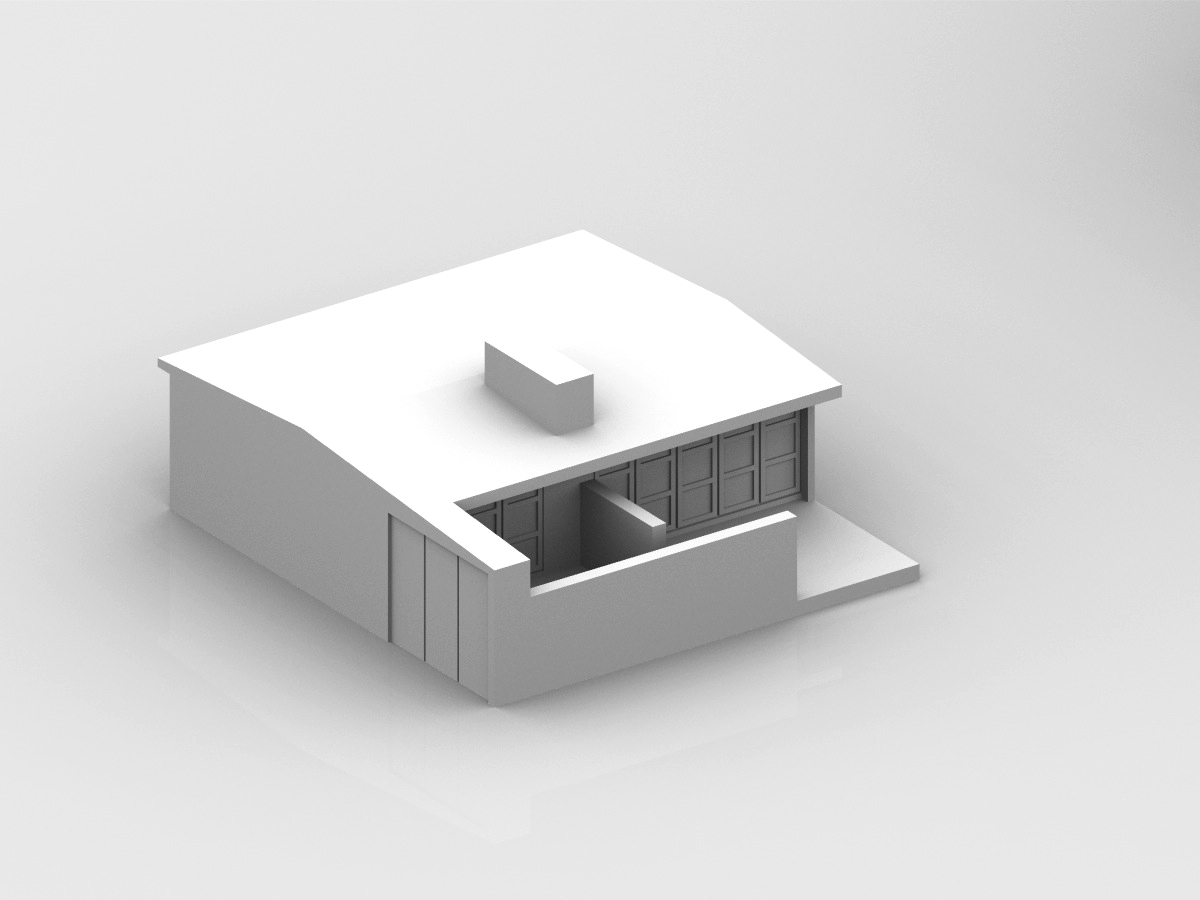
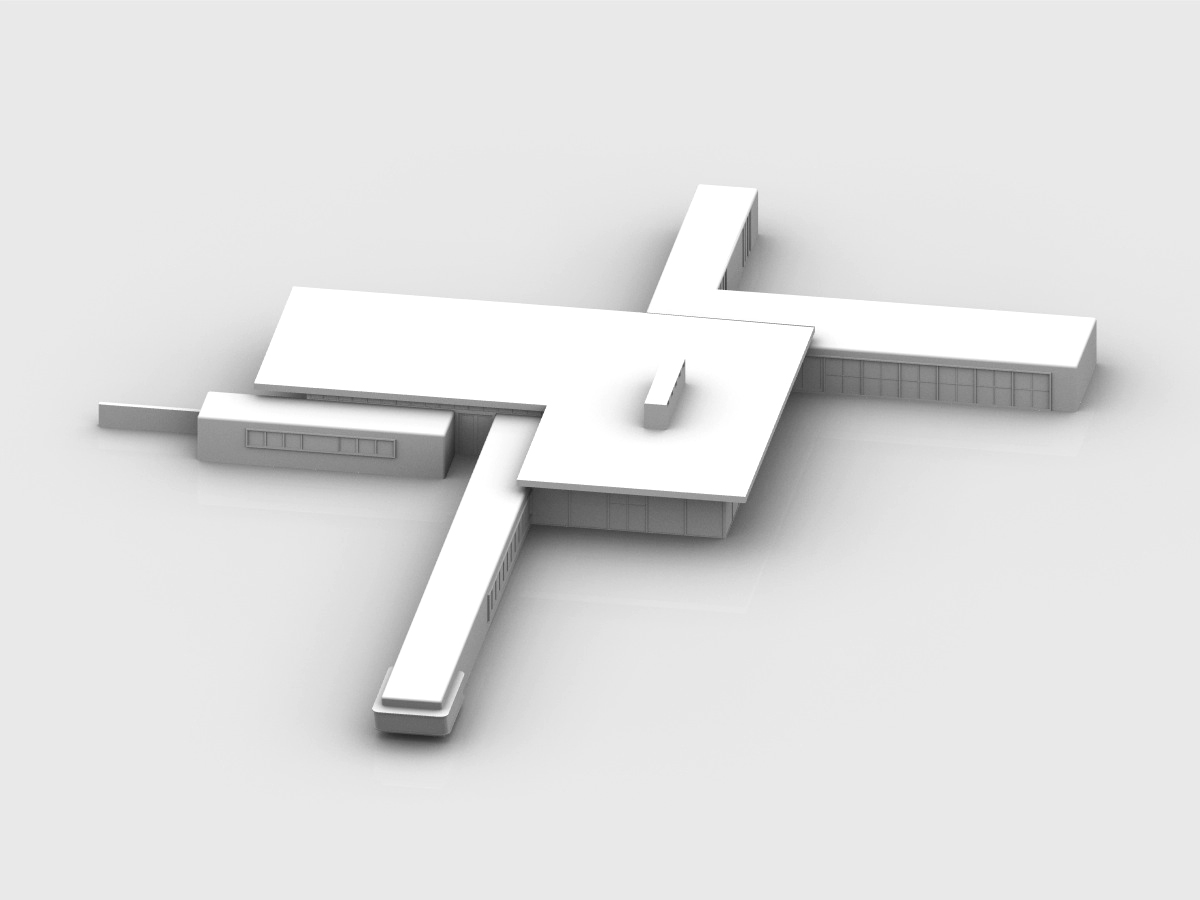
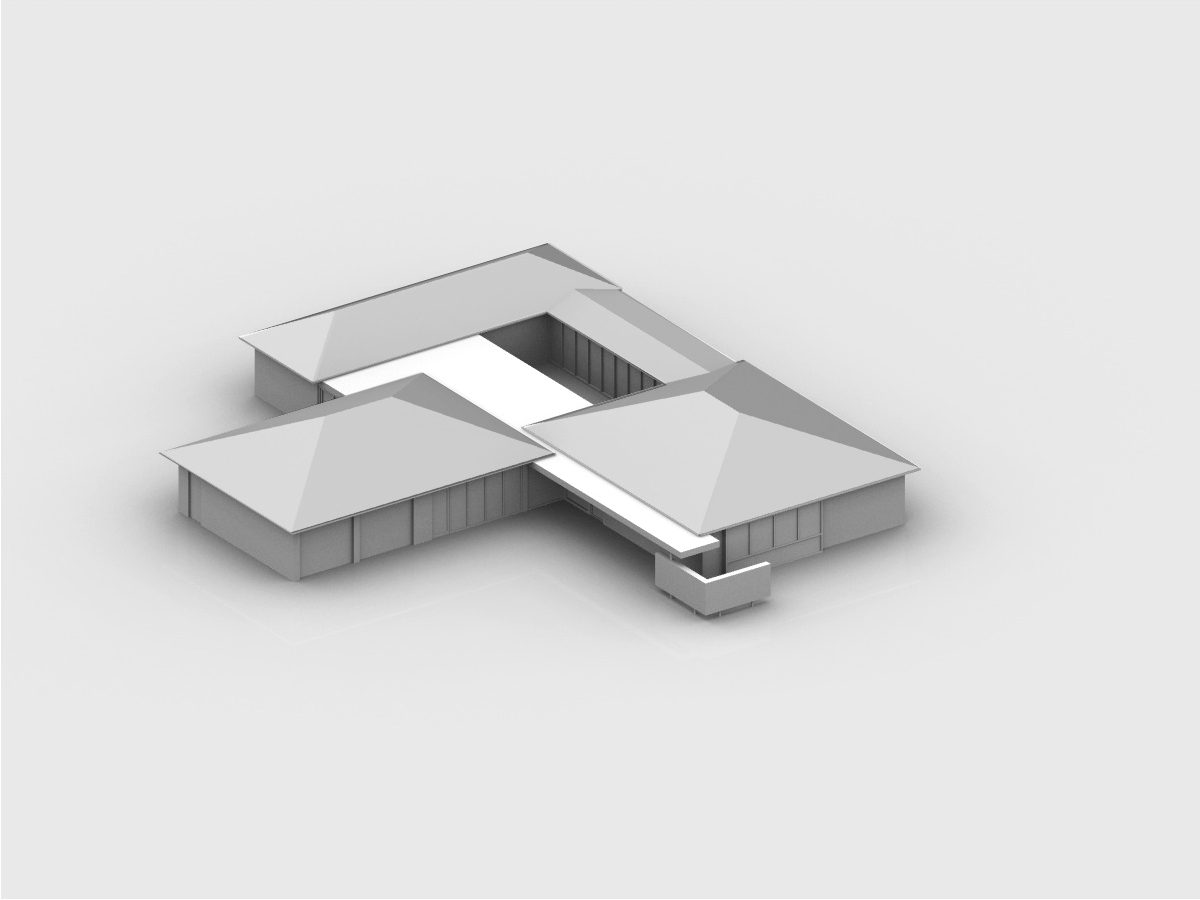
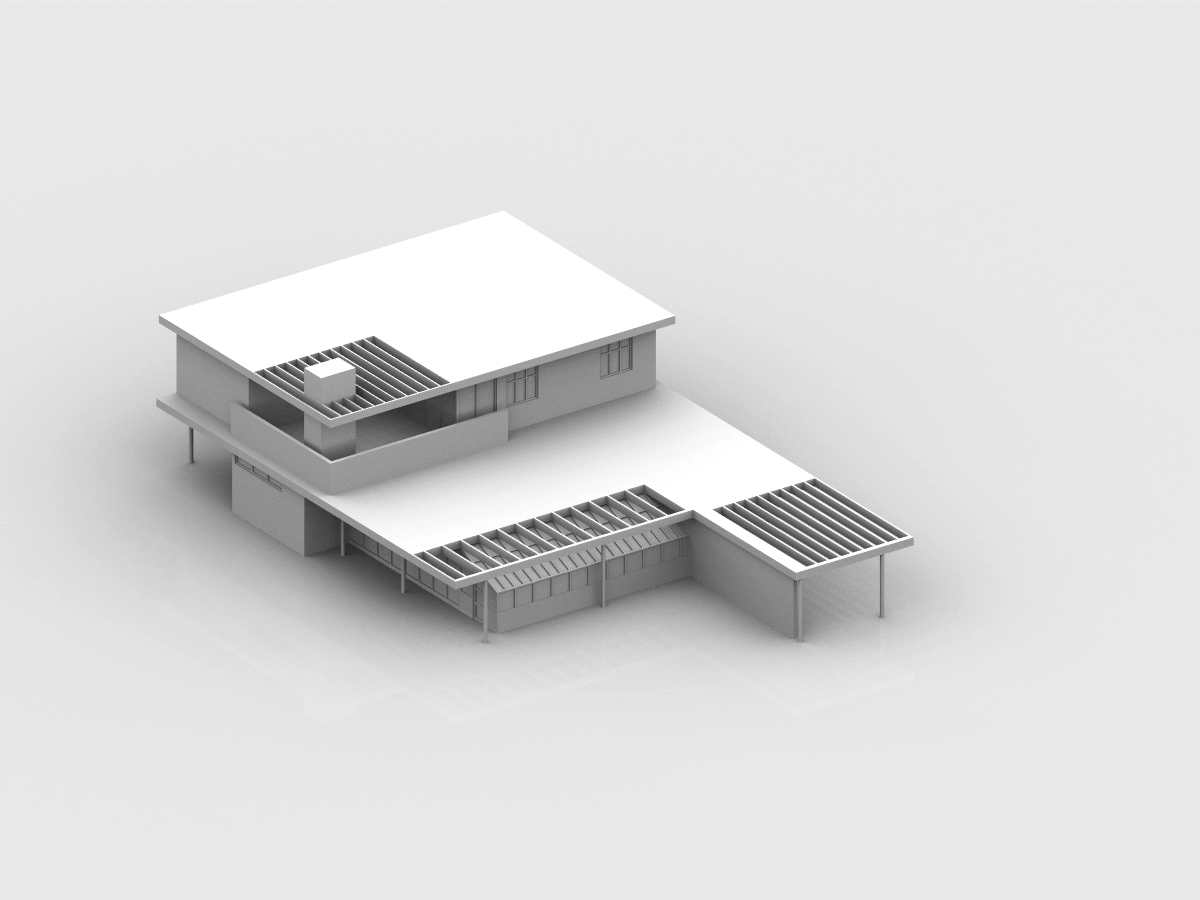
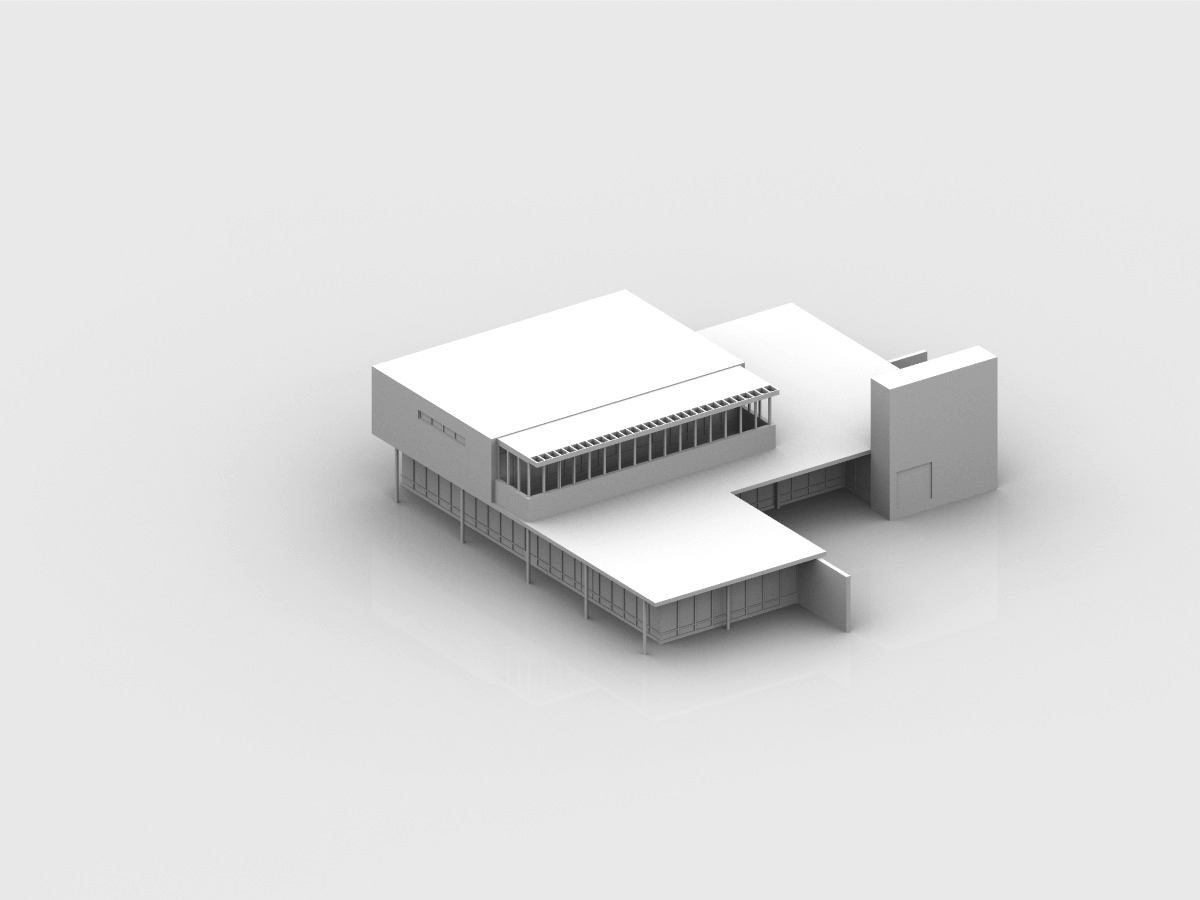
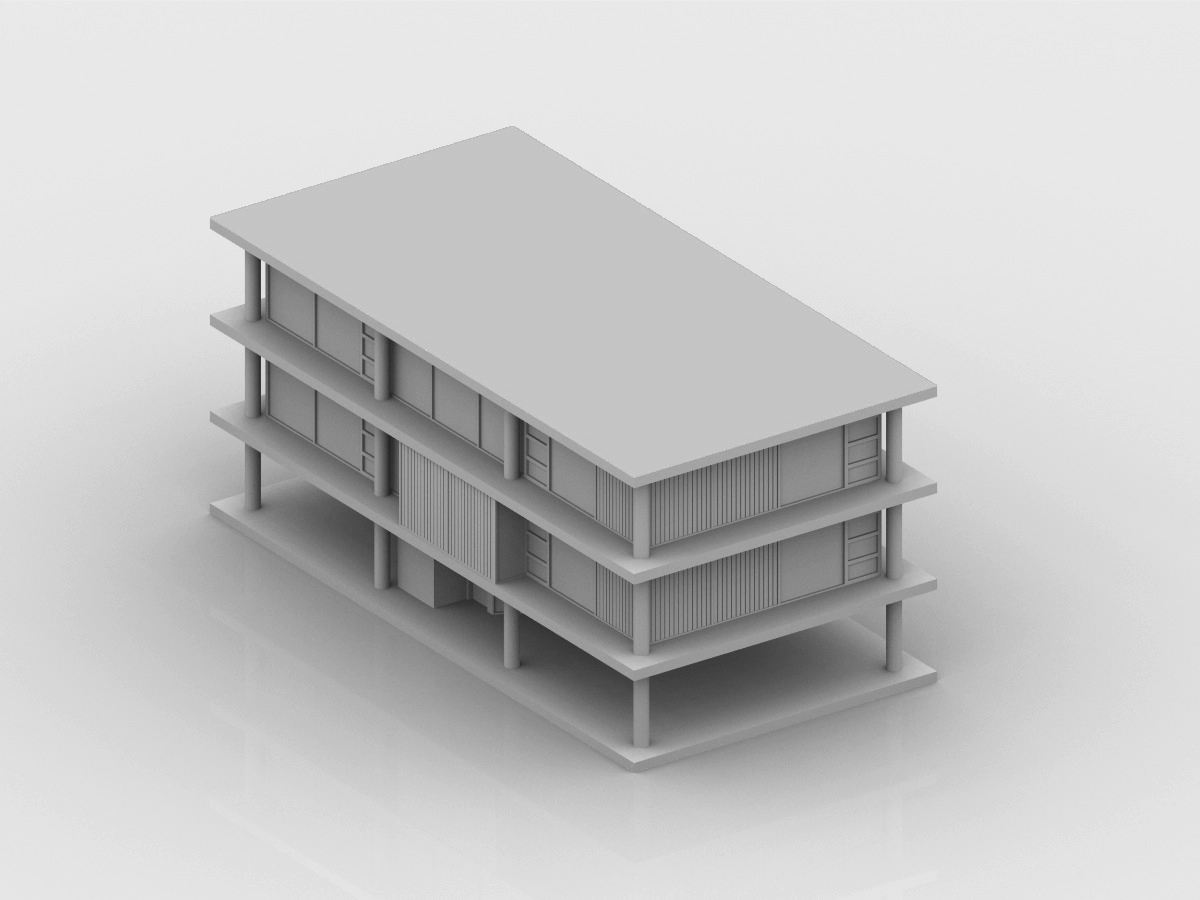
The early Goldberg houses are difficult to compare and assess. The models allow quick viewing and comparison between the different solutions and approaches.
The Higginson House was Goldberg’s first project, a small house in canvas.
The Snyder House is largely gone, with only the central core remaining. The seven (!) prefabricated “boxcar” elements were arranged in a pinwheel shape, attached only to the core at one end.
The Kirchehimer House (1952) is also demolished, and its plans only recently uncovered. Largely unknown, its three pavilions were arranged around a central court and covered with a pitched roof.
The Abrams and Heimbach Houses is representative of Goldberg’s early explorations into massing and volumetric expression.
The Helstein House was one of his last houses (done in the 1950s) and its concrete frame and infill panels follow quite closely Corbusier’s Do-mi-no concept.
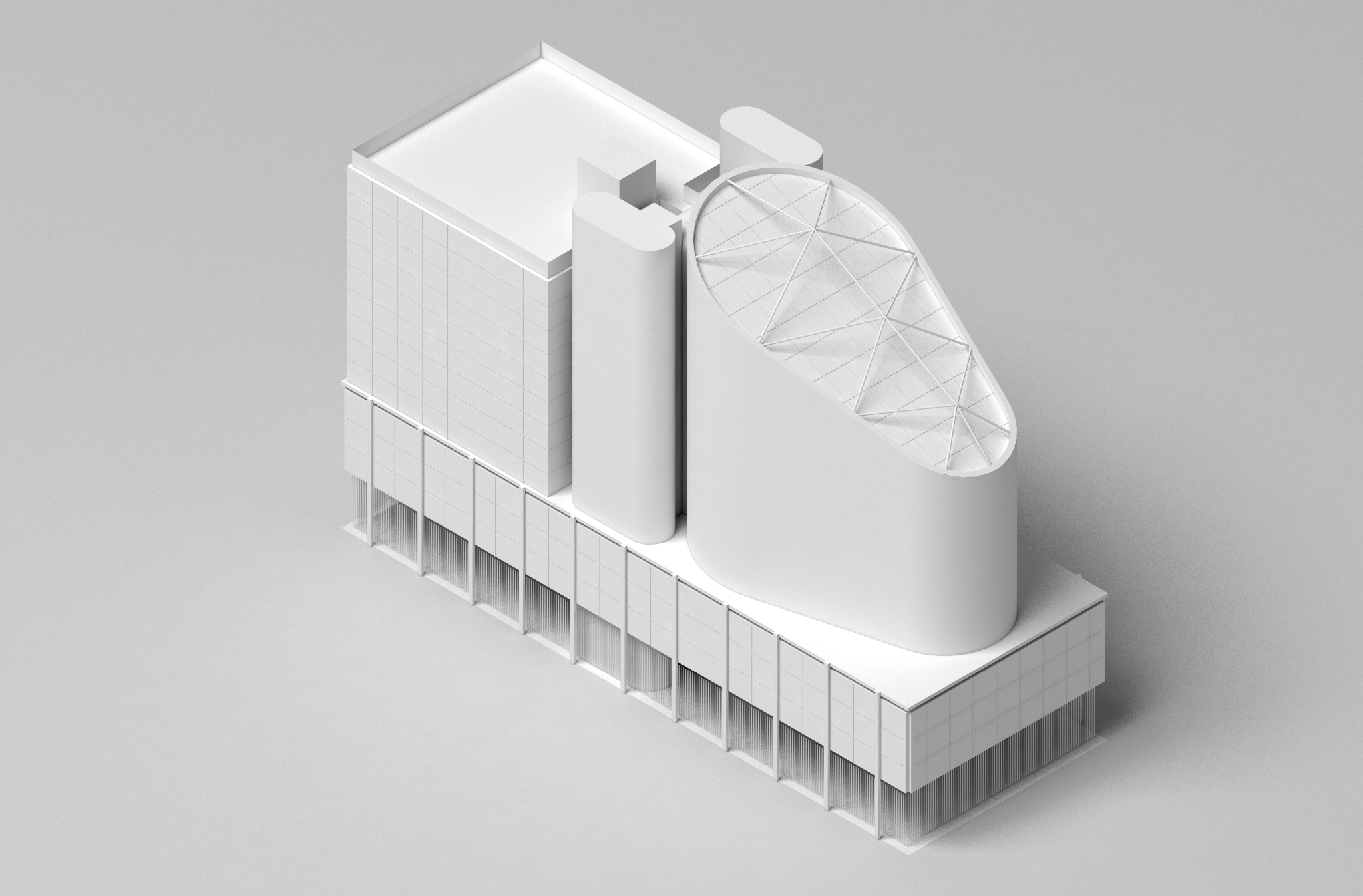
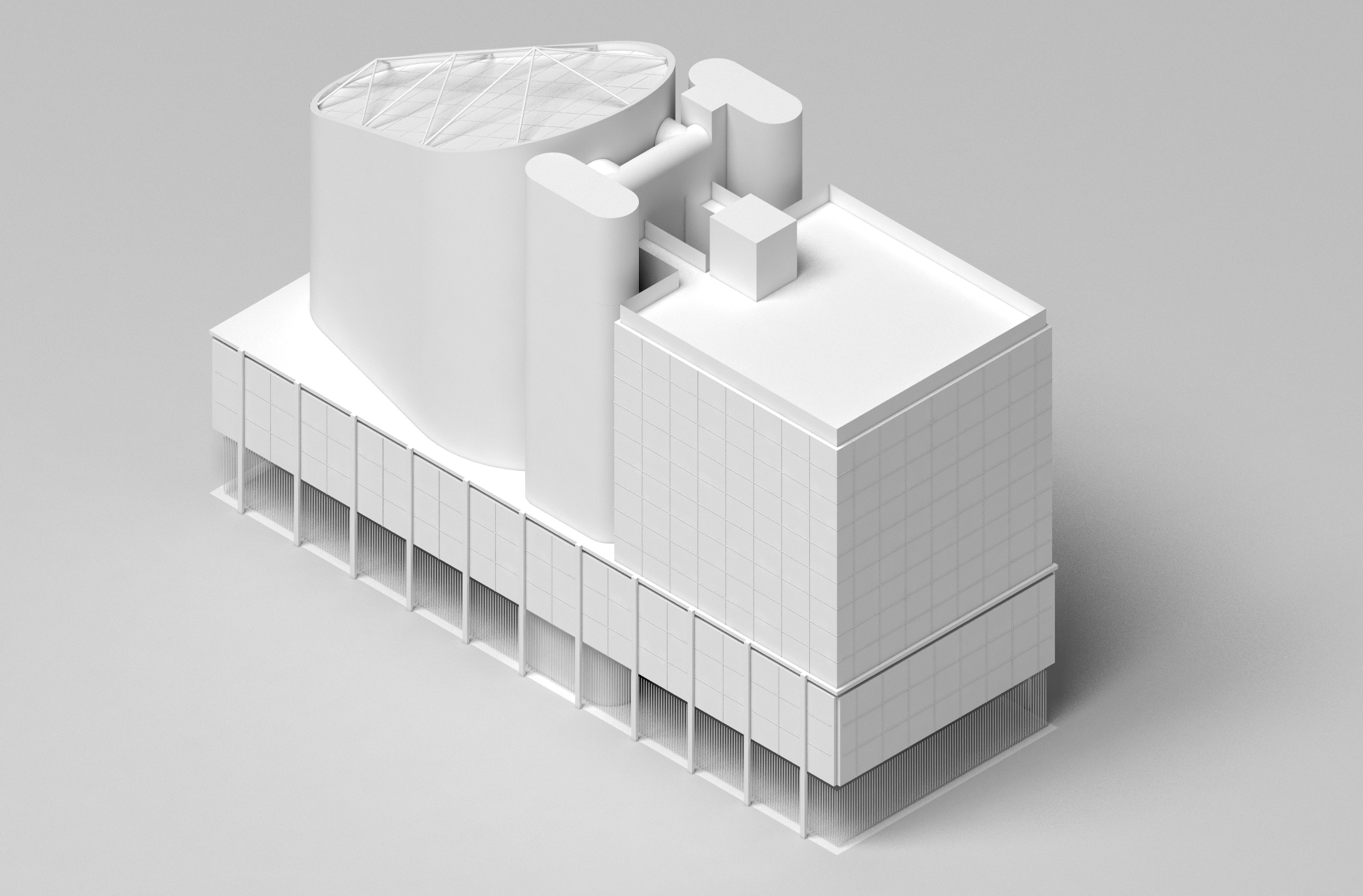
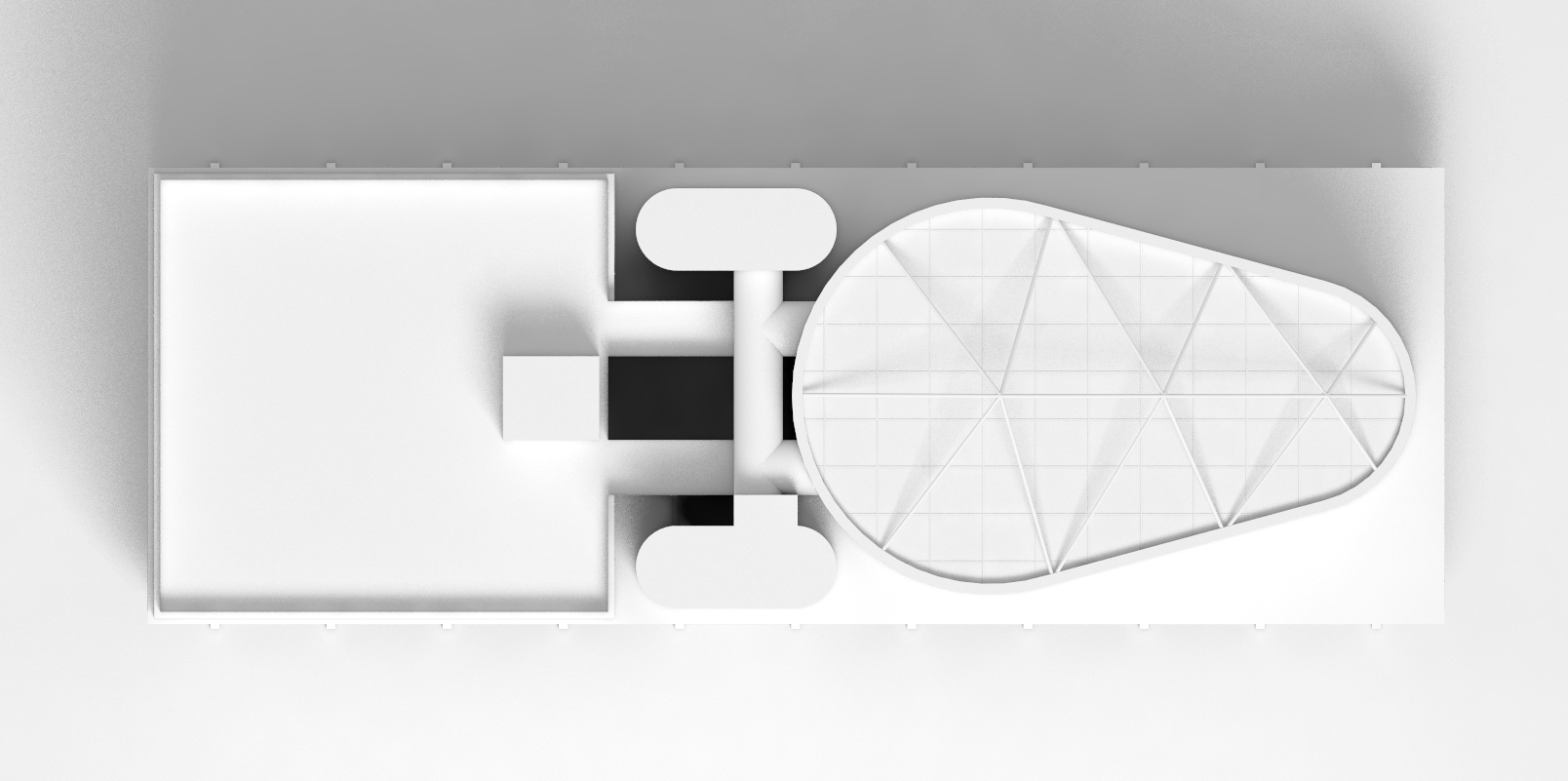
In the late 1980s, Goldberg designed this complex small project as a new home and office space. A combination of Mies and Corb, it offers a different view into his work, a path of alternatives not often considered.
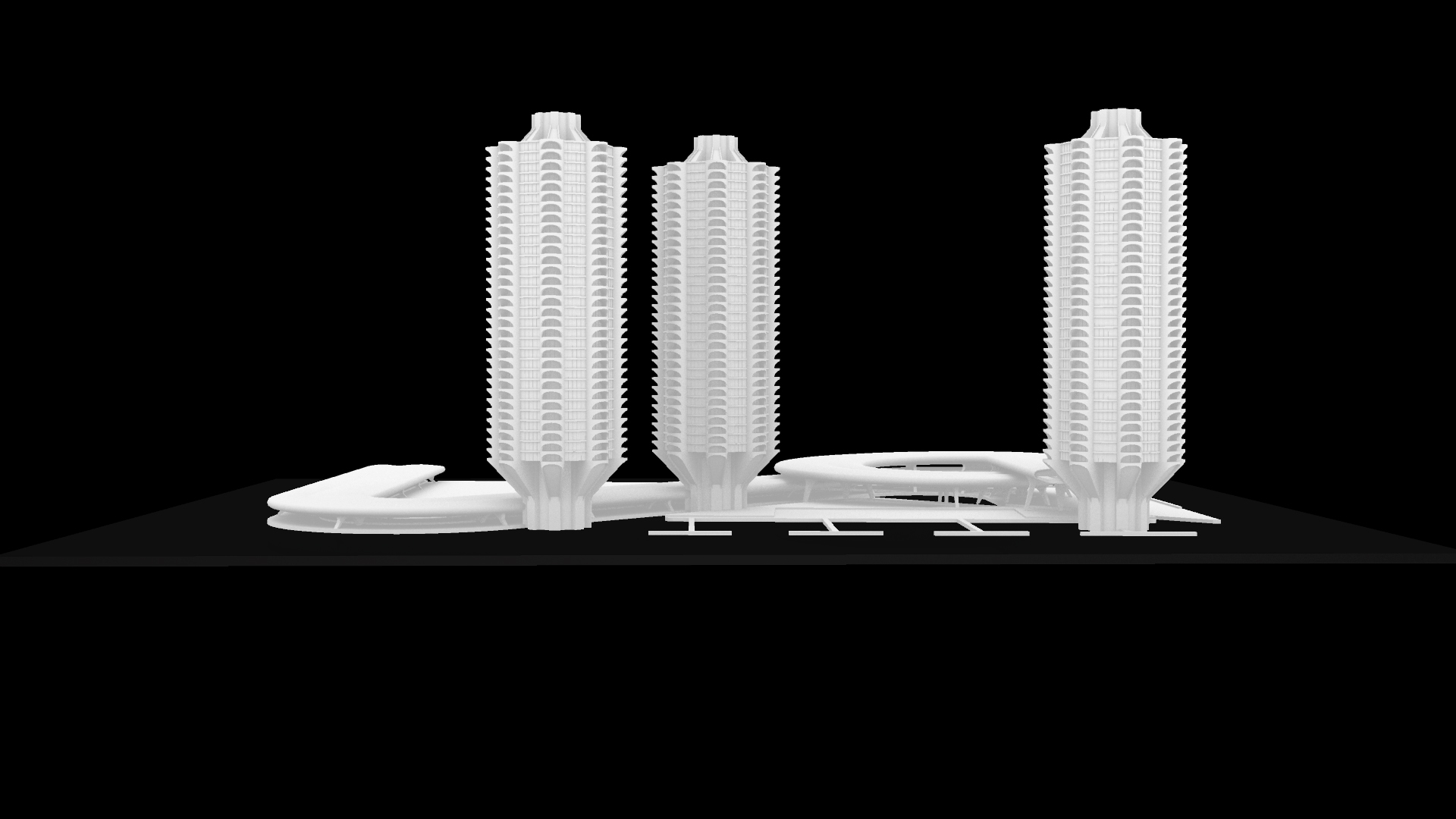
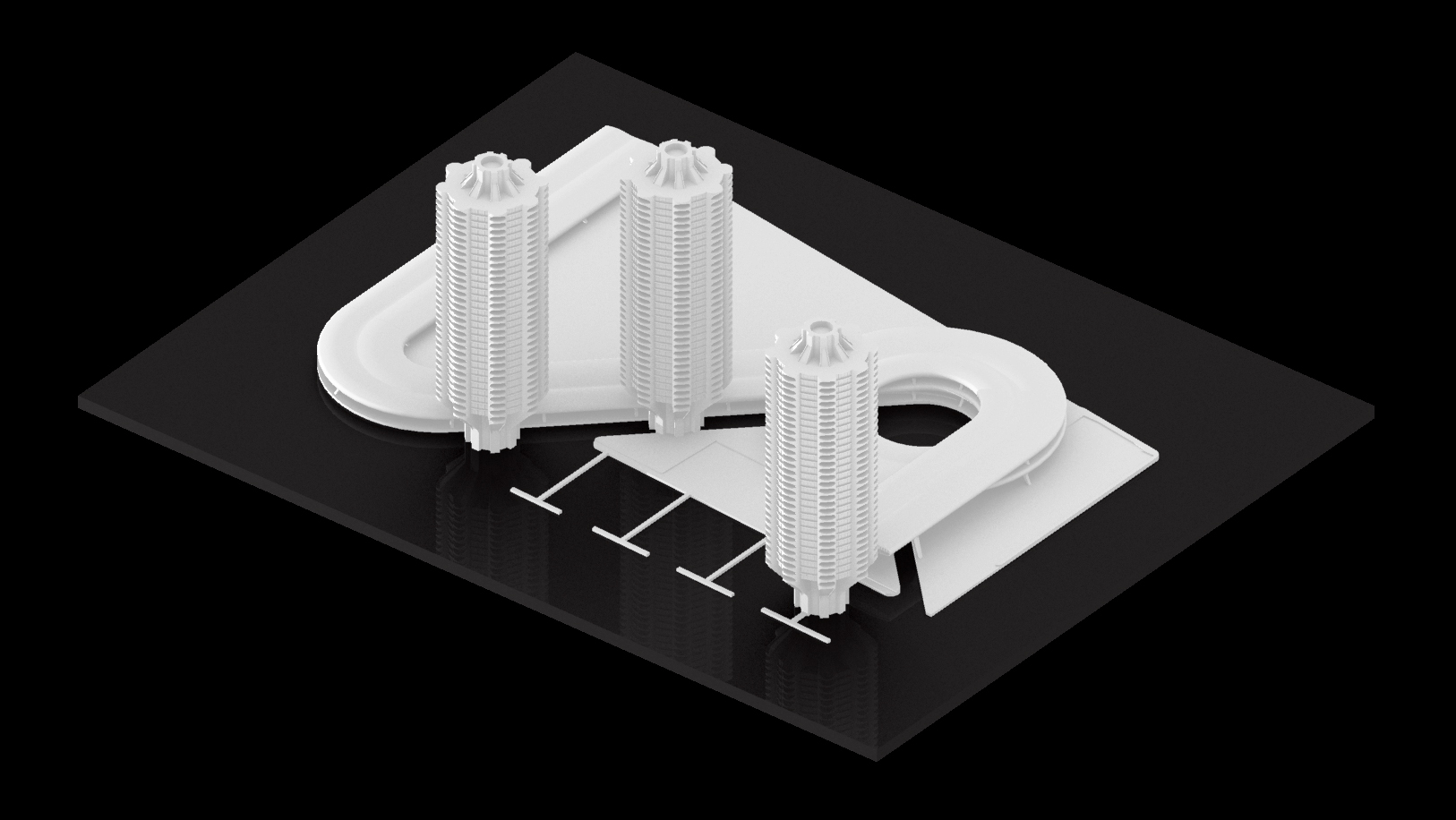
Several projects were proposed for a Marina City - Detroit. This one featured a commercial “band” or tube that wrapped around its base. The towers were only shown in sketch form, and are approximated here with language from the River City proposals roughly five years later. The massing arrangement is both engaged to the site (use of water, outlines of activities) and also removed with the elevated commercial area.
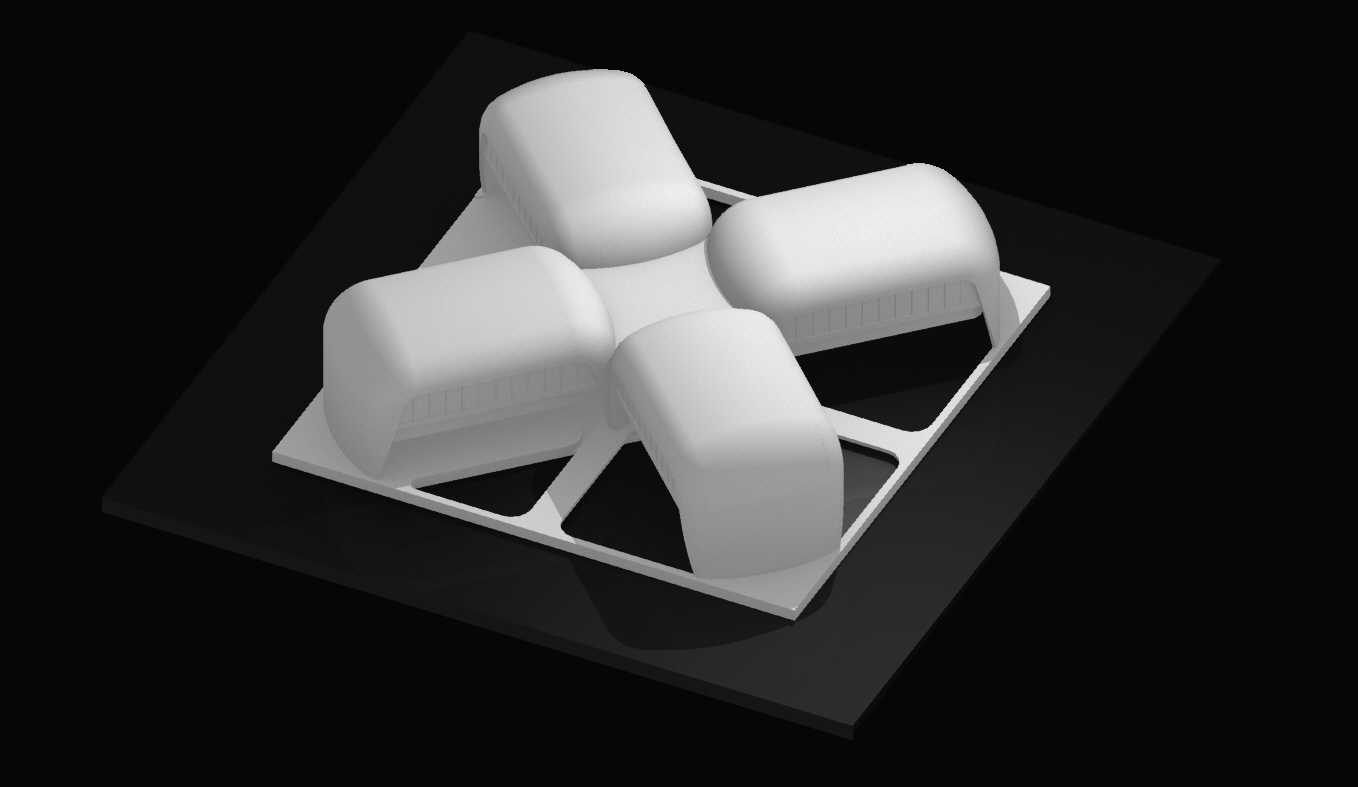
In 1959, BGA proposed a small office building in Florida of four wings, housing offices under separate concrete shells,with water pools. The plans were largely complete but the elevation only in sketch form. The recreation highlights this early consideration of shells, structure, and shapes.