- Urban Design
- Projects
- CTA
CTA
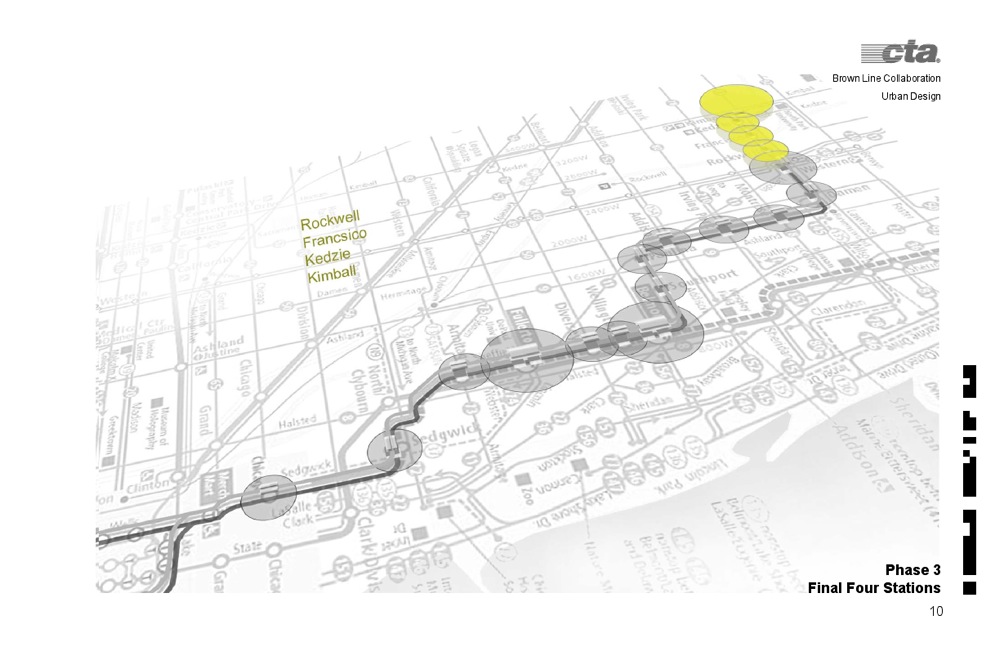
Design management services were provided to the CTA as part of their multi-billion dollar capital improvement program. The program was run by engineers, focused on the rail aspects of the construction, without familiarity of the design issues or the neighborhoods of Chicago. The project involved the reconstruction and enlargement of 16 stations in one undertaking. The design work had been split among four different architects.
Systems had to be developed to coordinate the work of the different architectural firms, not only in design intentions, but also in the details, as at the end of the day, CTA would be managing and operating each of the 16 stations as part of their portfolio. in addition, urban design issues had to be considered, as the fit of the stations in the neighborhoods was important to the public as users, but was often not well understood by the engineers.
CTA was interested in both fitting into the existing neighborhoods without conflict, but also in improving their design details. Due to difficulties during the bidding process (the price of steel went up 23% just during the bidding, a difficulty in a $400 million project), many of the details were not achievable. However, the overall stations were welcomed and accepted without difficulty, testament to the benefits and utility of thoughtful urban design.
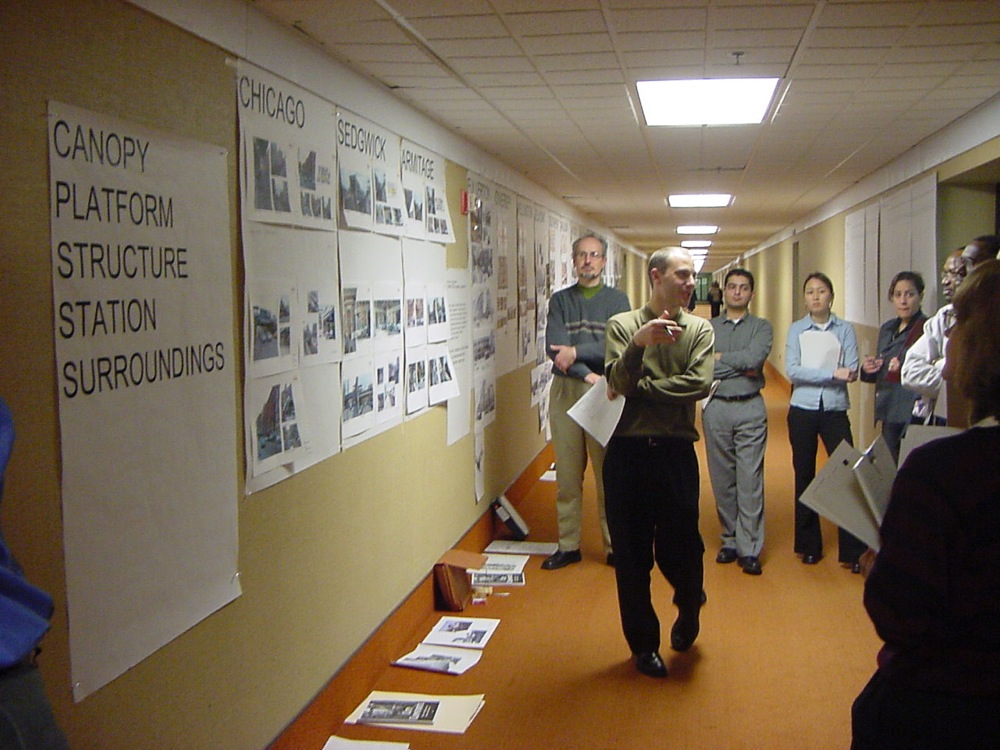
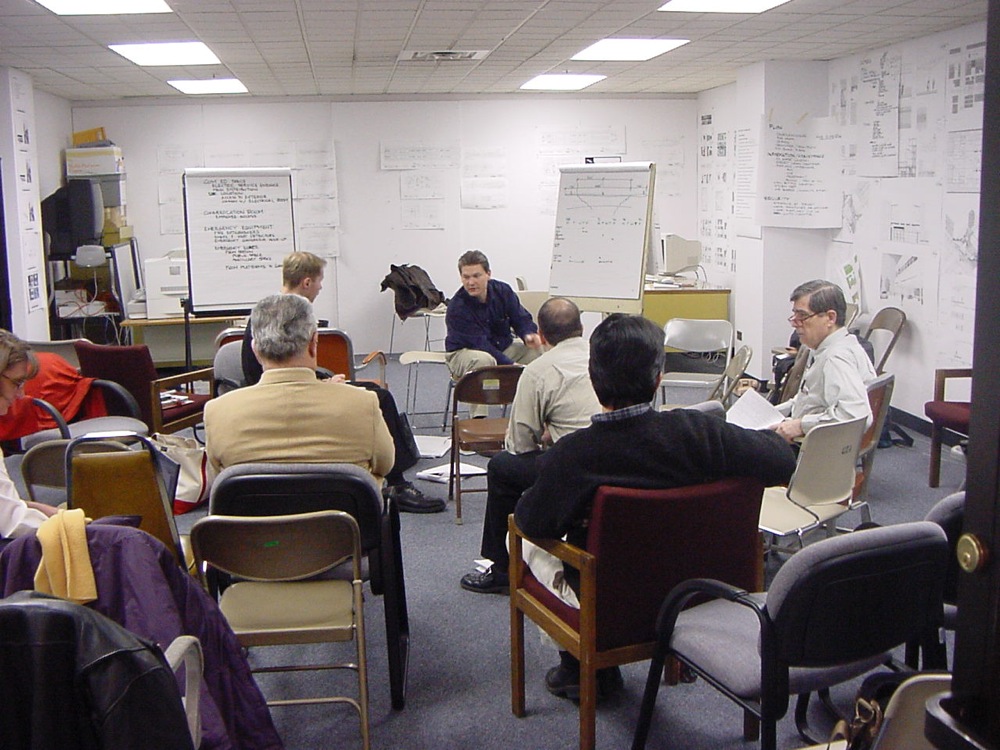
Urban design workshops were held to develop shared goals and understandings, and each of the stations were studied from this perspective. Design guidelines were prepared to guide the work; and Ken Kruckemeyer and Geoff functioned as a design review committee for each of the designs. The workshops were held within CTA headquarters to raise the profile of the design effort.
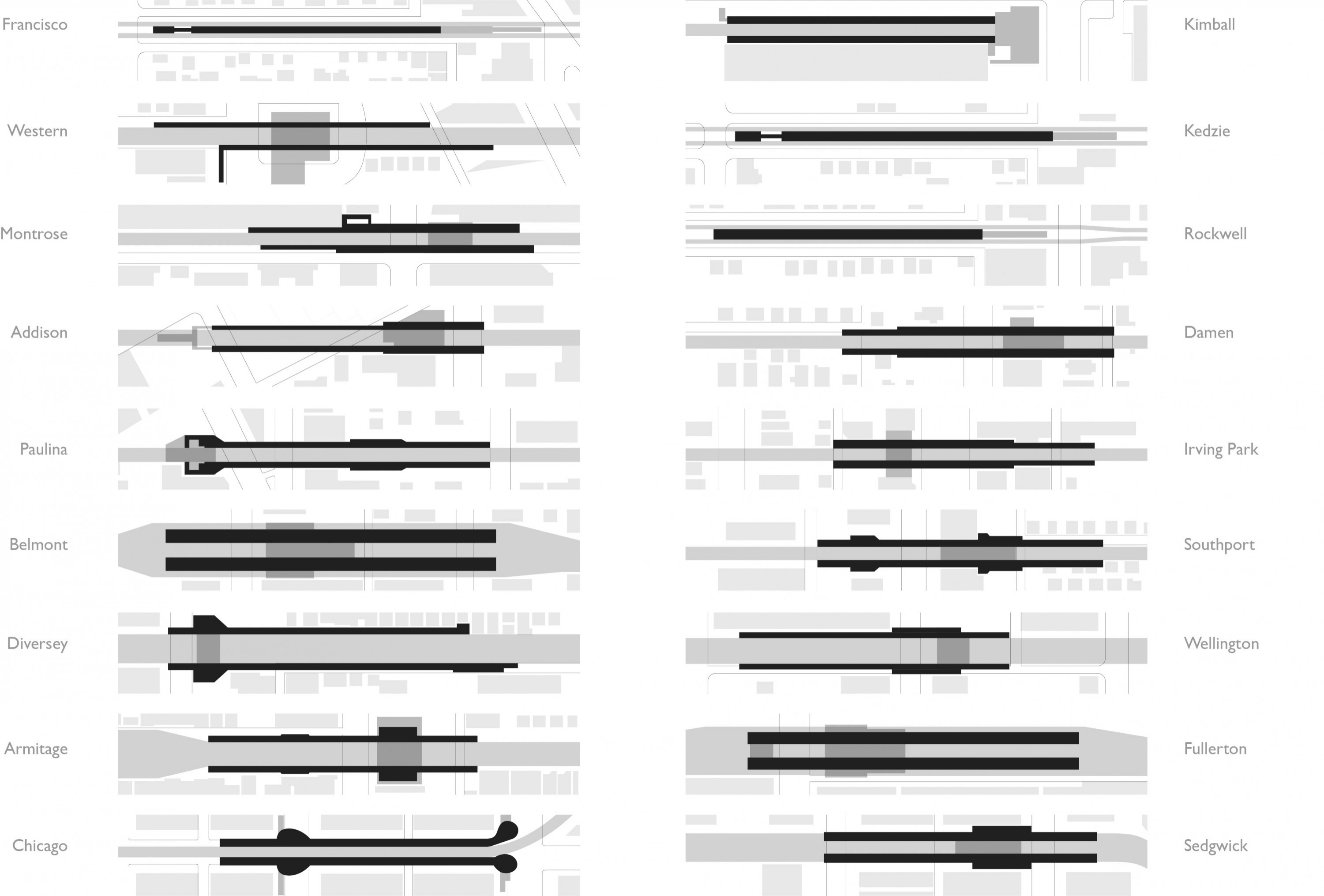
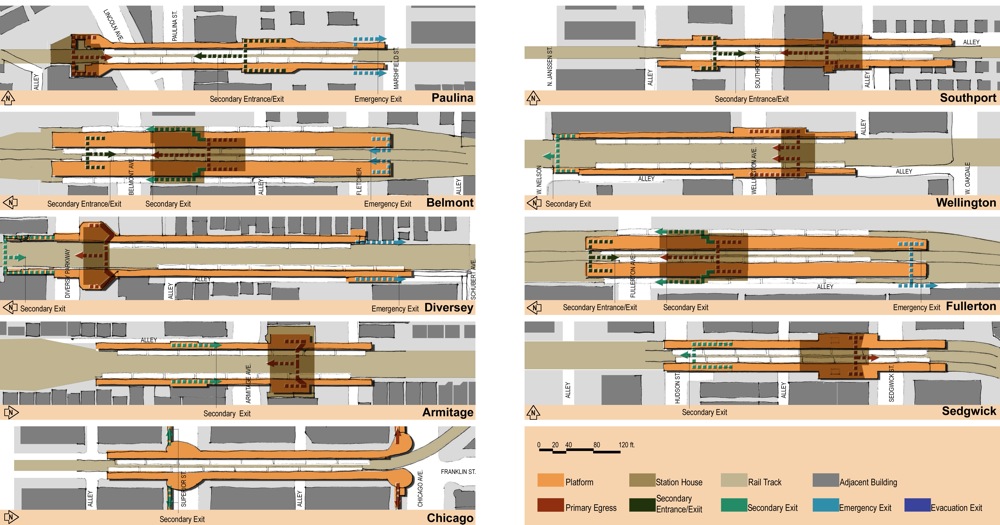
This abstract drawing was prepared to highlight the different layout requirements for each station. While seemingly simple, it turned out that each station and neighborhood presented unique challenges as to where egress could and should be located. In the end, what started out as a systematic improvement for each station turned out to be custom for each location. The care taken was ultimately key to the success of the project.
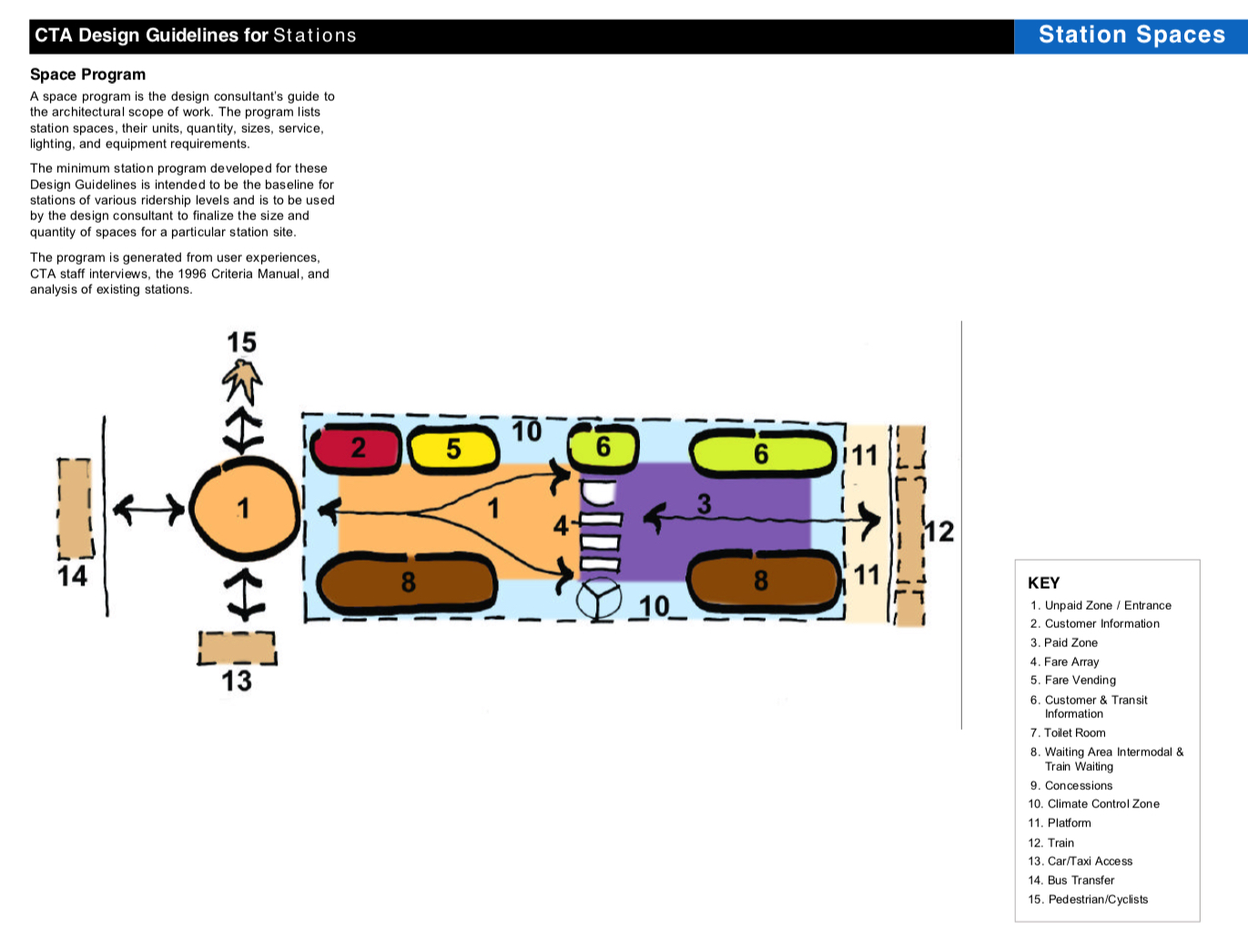
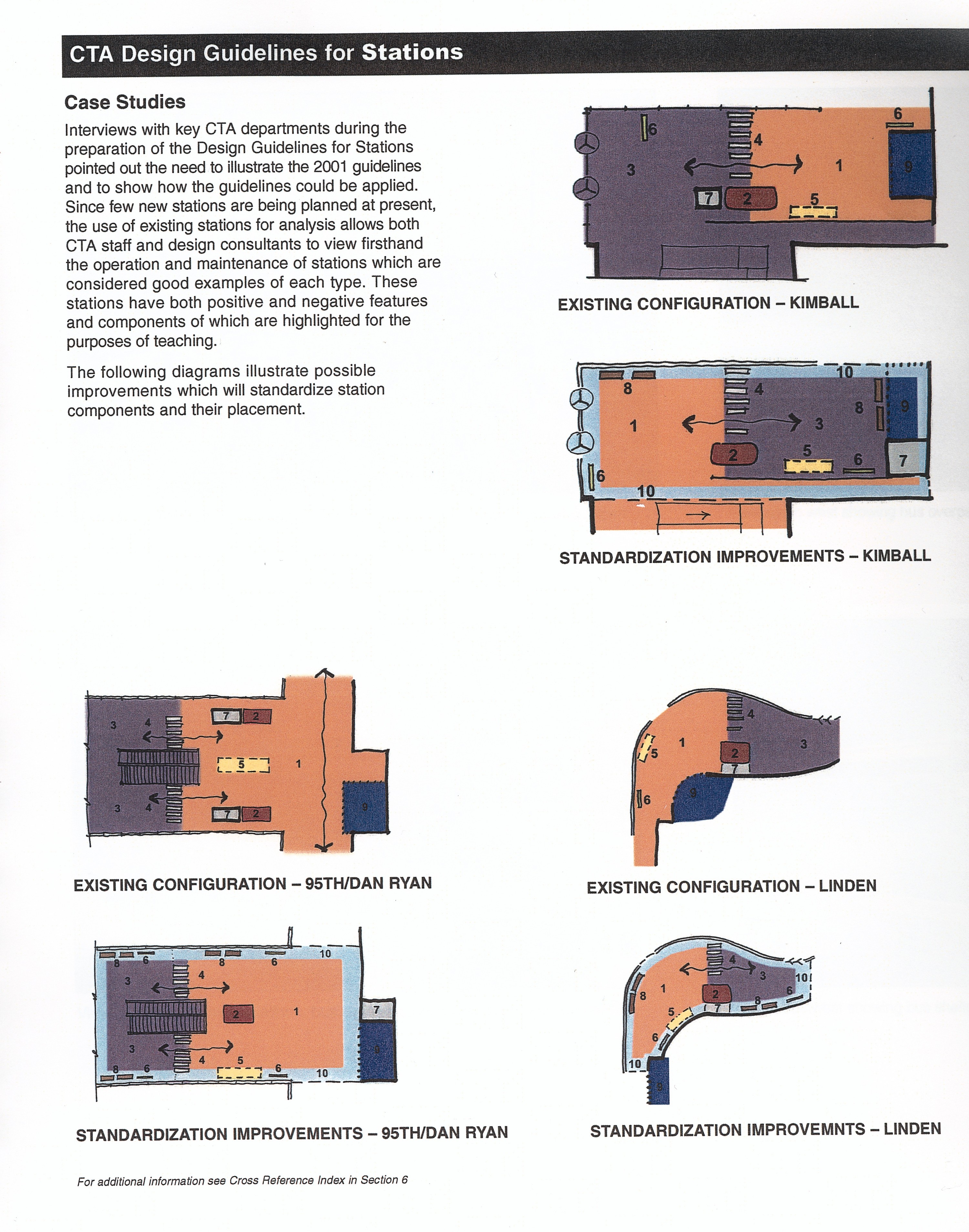
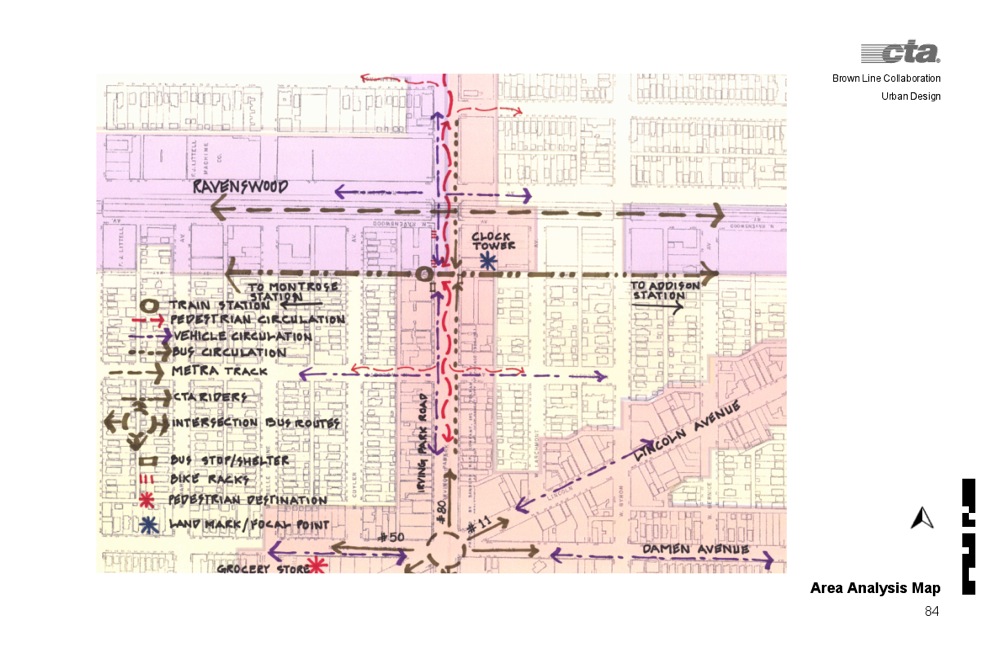
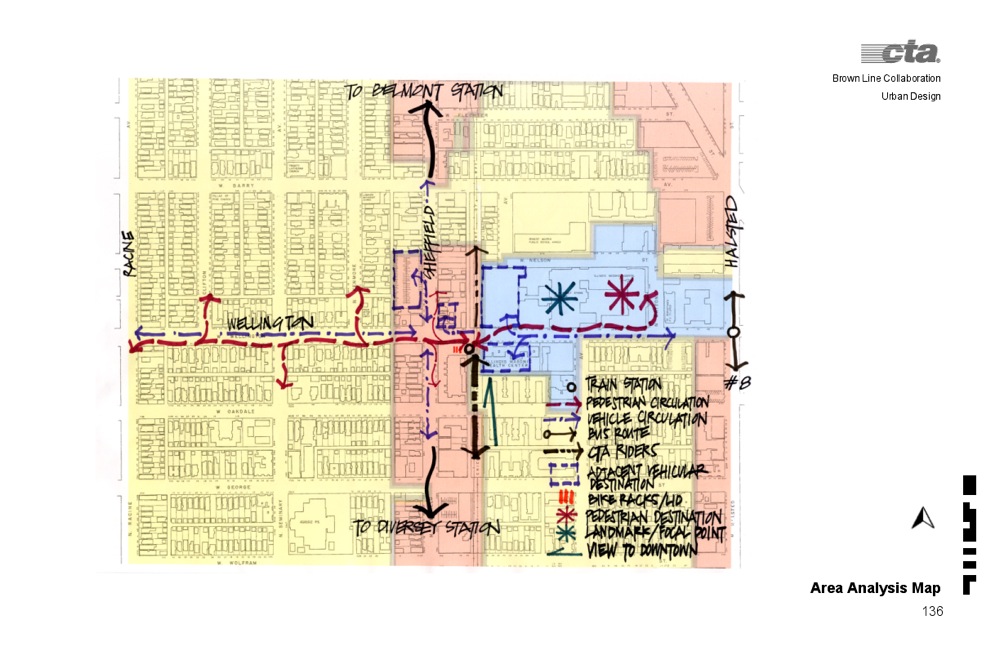
Different design drawings highlighted the issues involved in the stations. While simple in construction, CTA stations involve movements of many people at different times and ways. Study revealed the patterns that needed to be respected and improved in the new designs.
Drawings for the design guidelines outlined the majority of elements to be considered and basic considerations to be respected (thanks to DLK). The urban design drawings were prepared by the architectural teams and enabled greater understanding of how the stations functioned in the neighborhood, as well as outlining larger urban issues to be addressed so that the new stations would function well.